
video
Vedic Maths: Vilokanam Sutra (Addition)
Vedic Maths has two formulae for addition. They are Dhashamshaha and Vilokanam. It's one of the easiest ways to start one's Vedic Maths journey.
Vedic Maths is the World’s Fastest Mental Maths System. It is a collection of techniques/formulas, better known as Sutras, that facilitated the easy and fast calculation of mathematical arithmetics.
It consists of 16 sutras/formulae and 13 sub-sutras/sub formulae which can be used for solving problems involved in arithmetic, algebra, geometry, calculus, and conics. Vedic Maths is very simple and effective.
It produces single line answers through the combination of mental maths, and pen and paper calculations.
As students, Vedic Maths can help you learn to perform day-to-day and academic calculations faster without using a calculator. It can be used for solving problems involved in arithmetic, algebra, geometry, calculus, and conics.
It is also beneficial for those who are preparing for competitive exams. Vedic maths helps in developing Mental Calculation techniques and implementing the Concept of Simplicity and Mental Calculation.
It also improves Logical Reasoning and brain stamina. It helps one cope with a stressful environment by enabling you to manage your time wisely.
As teachers, vedic maths can be one’s life changer. It can help them improve their performance and open up their life to a world of endless opportunities and new and unique experiences. It can help start your own venture in the education industry.
This page enlists the essential study material in the form of videos, documents, practice tests and assignments that are needed to learn Vedic Maths. It covers basic topics such as on Addition, Subtraction, Multiplication, as well as complex topics like Square and Square Root calculations, and many more! This study material can be used to supplement your Vedic Maths course, or you can use it for self learning. We continue to add new learning resources on this page to ensure that everything is up to date. All of the material has been created by top instructors with years of first hand experience.
Addition is the most basic mathematical operation in which two or more numbers are combined to arrive at a greater number. The word addition also refers to the ‘act of adding’. Addition is one of math's basic operations. Therefore, it is essentially one the most important lessons in understanding the basics of the application of Vedic Maths. This will help you in understanding the foundation of Vedic Maths and, thereby, help you move up higher up in terms of your knowledge and skills of Vedic Maths. We have two sutras/formulae for addition in Vedic Maths. These are - Dhashamshaha (Dropping Tens/Line Addition) and Vilokanam (Spark Addition / Left-Right Addition). The former helps you easily calculate big numbers, as well as multiple numbers by making groups of ten. The latter, Vilokanam, means observation. It is called spark addition because within a spark of time we can find the sum. This method helps to find the sum of numbers by just looking at them. One can practise both these methods to speed up their calculation speed.
Vedic Maths has two formulae for addition. They are Dhashamshaha and Vilokanam. It's one of the easiest ways to start one's Vedic Maths journey.
This is a practice test designed to challeneg your Vedic Maths knowledge. This one focuses on Addition and Subtraction. Let's solve!
This practice worksheet deals with the Vilokanam Sutra used for Addition, and Nikhilam Navatah Charamam Dasatah, all from 9 last from 10 method.
This practice worksheet deals with Vilokanam Sutra used for addition, and the method used for multiplication of numbers with 11. Let's revisit!
In mathematics, the act of subtracting means to take away from a group or a number of things. When we subtract, essentially, the number of things in the group reduces or becomes less. The minuend, subtrahend and difference are parts of a subtraction problem. Therefore, it is essentially one the most important lessons after addition in order to understand the basics of the application of Vedic Maths. Infact, addition and subtraction are two sides of the same coin. They are exactly the opposite to one another. Subtraction will help you enhance your understanding of the foundation of Vedic Maths and, thereby, help you move up higher up in terms of your knowledge and skills of Vedic Maths. Subtraction in Vedic Maths is called “Vyavkalanam”. It is considered to be the easiest method/sutra when compared to any other conventional method. Subtraction has two sutras. The first is called Nikhilam Navatah Charamam Dasatah, or all from 9 last and last from 10. Under this method, we subtract every digit from 9 but the rightmost digit from 10. The second is called Vinculum. Under this method, we use the help of a bar that is placed on top of a digit that helps us to determine its degree.

Vyavkalanam, or subtration, in Vedic Maths is one of the easiest sutras. It is one of the best suited Vedic Maths sutras/formulae to teach kids.
Vyavkalanam Sutra, or the formulae for subtraction, is Vedic Maths is one of the easiest to learn. Kids from 7 to 10 years of age can learn this.
Spark Subtraction, as the name suggests, is a method through which we can compute our calculations within a spark of time.
This practice worksheet deals with Nikhilam Navatah Charamam Dasatah or all from 9 last from 10 methods, and the Vinculum Method. Let's revisit!
This is a practice test designed to challeneg your Vedic Maths knowledge. This one focuses on Addition and Subtraction. Let's solve!
This practice worksheet deals with the Vilokanam Sutra used for Addition, and Nikhilam Navatah Charamam Dasatah, all from 9 last from 10 method.
This is a practice test designed to challeneg your Vedic Maths knowledge. This one focuses on Nikhilam Navatah Charamam. Let's solve!
In mathematics, the term 'multiplication' means the method of calculating the product between two or more numbers. It is a primary arithmetic calculation. It is an extension of the basics of mathematics, as well as Vedic Maths. In Vedic Maths, multiplication is divided into two parts. The first technique is called Specific Technique, and it is only applicable to some types of numbers. The other technique is called Generic/General Technique. It is applicable to all types of numbers. Under specific techniques, we have Doubling Technique. Essentially, doubling means either adding the same numbers together or multiplying the given number by 2. Under multiplication, this technique helps in multiplying any number with the number 2, and numbers such as 5, 50, 500, 5000 and so on. The second specific technique is called Halving Concepts. This helps in finding the half of any number. Moving ahead, we have techniques such as multiplication of numbers by a series of different numbers. Similarly, there are also techniques that help you in calculation multiplication tables of any two numbers upto 1000.
The Doubling Technique helps us to calculate the doubles of large numbers. Children from class 5 onwards can easily use this method.
In this video, we will be discussing the practical application and advantages of the Doubling Technique.
As the name suggests, the Halving Concept means when you need to find the half of a number. Kids from age group from class V onwards can use it.

Children usually find it difficult to learn tables upto 12 or 13. But with the help of this, we will be able to do the calculations upto 100.
In this video, we will be learning how to multiply any number with a series of 9, i.e., the multiplier has only 9 as the digits.
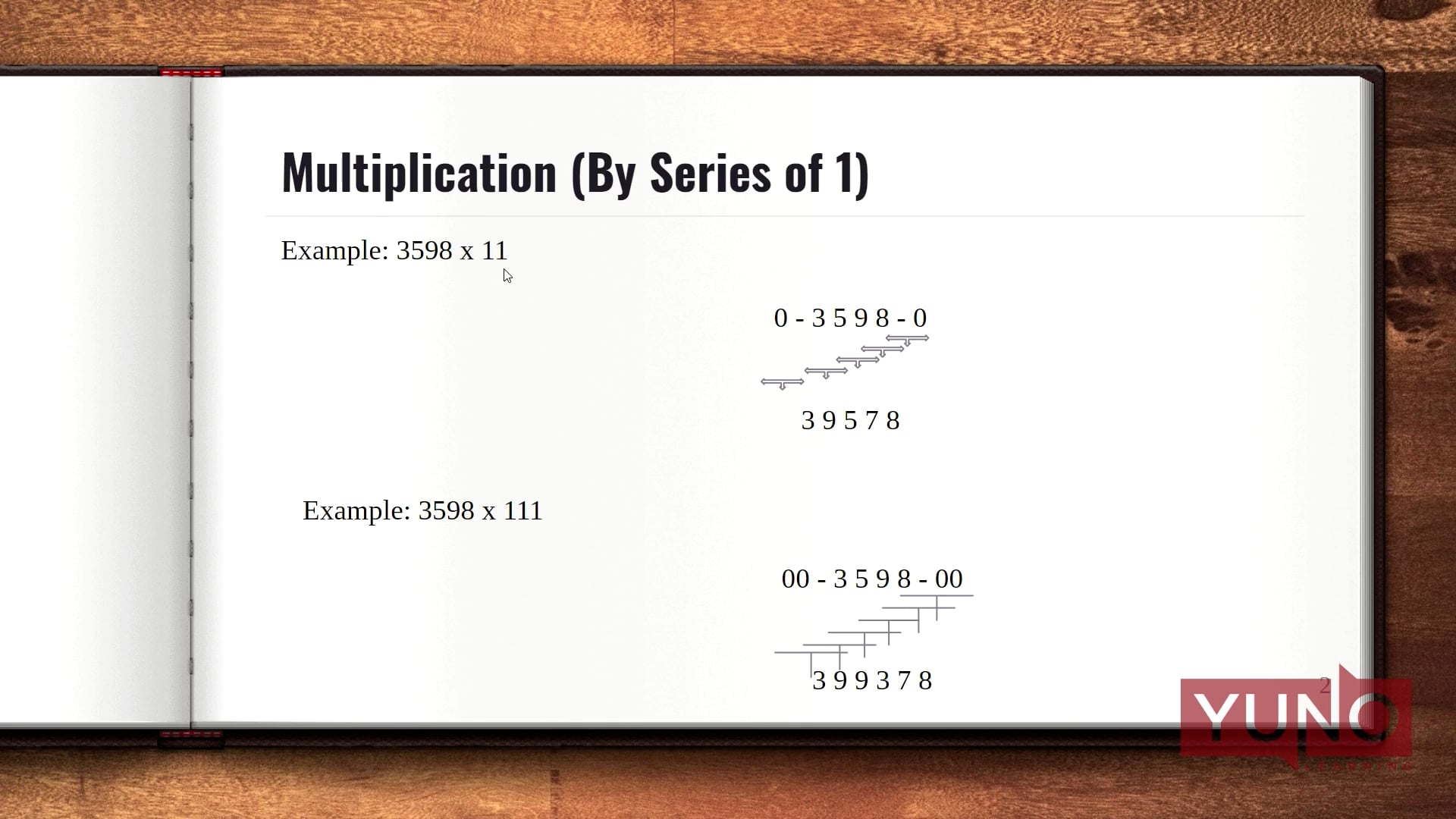
In this video, we will be learning how to multiply any number with a series of 1, i.e., the multiplier only has 1 as the digits.
This method is known as the Crowing Gem of Vedic Maths because with its help we can multiply any number with any number in a single line.

In this video, we will be discussing a method of multiplication that considers base.
In this method of Vedic Math, we will be learning about a technique that will help us to multiply a number ‘x’ with any single digit number.
This method of multiplication in Vedic Maths is called Antyayor Dasakepi
In this method of Vedic Maths, we will learn the method of multiplication of any double digit number that ends with 1.
In this method of Vedic Maths, we will learn multiplication of two numbers using factors. Happy Learning!
This video discusses a special kind of multiplication method used to solve examples of multiplication with 15.
This method is derived from the ancient mathematical methods. Children from the age group of 7 years and above can learn this method.
This method is used to do the multiplication of any 2 digit numbers. This method is derived from the ancient mathematical methods.
This method is used to do the multiplication of any 3 digit numbers. This method is derived from the ancient mathematical methods.
This Vedic Maths multiplication trick is one of the easiest and shortest methods to write multiplication tables of any 2 digit number.
This is a Vedic Maths practice test that will test your abilities to use the Doubling Technique, which helps us multiply big numbers.

This practice worksheet deals with the multiplication method that helps you multiply numbers that end with 1. Happy solving!

This practice test is designed to test you knowledge in Vedic Maths. This one deals with the method of multiplying with 15. Let's solve!
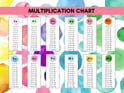
This is a practice test designed to challeneg your Vedic Maths knowledge. This one focuses on Multiplication. Let's solve!
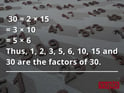
This vedic maths worksheet deals with the sutra that helps you multiply any number using its factors. Let's revisit!
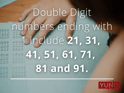
This worksheet deals with the Vedic Maths sutra that helps you carry out multiplication of double digits ending with 11. Let's revisit!
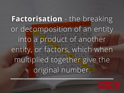
This worksheet deals with the Vedic Maths sutra that helps you multiply big numbers in seconds using factors. Let's revisit!
This worksheets deals with your Vedic Maths knowledge on multiplication. Let's revisit!
This worksheet deals with the Antyayor Dasakepi sutra of Vedic Maths. This method helps us to multiply numbers of a certain kind with ease.
This practice worksheet deals with the methods derived from Vedic Maths sutras that help in multiplying numbers such as the base method.
This practice worksheet deals with the methods derived from Vedic Maths sutras known as the Crowing Gem of Vedic Maths.
This worksheet deals with the base method and vertically crosswise method that helps us to easily multiply numbers.
This worksheet deals with the methods derived from Vedic Maths sutras that help in multiplying numbers whose sum of unit place is equal to 10.
This practice worksheet deals with the methods that help in multiplying numbers whose multiplier consists of only 1. Let's revisit!
This worksheet deals with the methods that help in multiplying numbers whose multiplier consists of only 9. Let's revisit!
This practice worksheet deals with the methods derived from Vedic Maths sutras that help in multiplication. Let's revisit!
This practice worksheet deals with Vilokanam Sutra used for addition, and the method used for multiplication of numbers with 11. Let's revisit!
In mathematics, division is a method of distributing a group of things into equal parts. It helps us to determine the number of equal shares anything, especially numbers, can have. It is one of the four basic operations of arithmetic. The division is operationally opposite to multiplication. In Division as well, we have two types of techniques. They are - Specific Techniques and General Techniques. The Base Method is a specific technique. The Vedic name for the base method is ‘Nikhilam Method’. Under this method we deal with the divisions that have a divisor that is close to the base. By base, we mean numbers like 10, 100, 1000 and so on. The second method is called the Transpose Method. The Vedic name for the Transpose Method is ‘Parvarthya Method’, that means - above the base. For calculations that are above the base divisions, we have this method. It is, therefore, called the Transpose Method.
In division, we have two types of techniques- specific techniques and general techniques. The Base Method is a specific method.
The Vedic name for the Transpose Method is Parvarthya Method, which means - above the base. Children from class VII onwards can use this method.

In this video of Vedic Maths, we will be learning about the concept of Digital Sum.
This is a special kind of division method used to solve examples when the divisor is 5.
This is a special kind of division method used to solve examples when the divisor is 11. This method is derived from the Vedic Maths sutras.
In this video of Vedic Maths, we will be learning a method of division that will help us to divide any number with any number.
This Vedic Maths practice worksheet will help you analyse and practice the doubling technique. This test will mostly use the second advantage.
This Vedic Maths practice test will help you analyse and practice the method of doubling technique. We will be using it's third advantage.
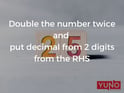
This Vedic Maths practice worksheet helps you to test the knowledge of one of the applications of Doubling Technique- Division by 25.
This practice test tests your knowledge on the Vedic Maths sutra that helps us to divide any two numbers when the divisor is 11. Let's solve!
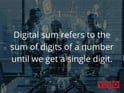
This worksheet deals with the method of Digital Sum and its application. The method is a direct result of Vedic Maths Sutras. Let's revisit!
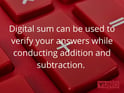
This worksheet deals with the method of Digital Sum and its application. The method is a direct result of Vedic Maths Sutras. Let's revisit!
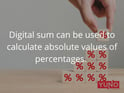
This worksheet deals with the method of Digital Sum and its application. The method is a direct result of Vedic Maths Sutras. Let's revisit!
This Vedic Maths worksheet deals with special kind of division method used to divide numbers when the divisor is 5. Let's revisit!
This worksheet deals with the Vedic Maths sutra on division will help us to divide any number with any number.
This worksheet deals with the Vedic Maths sutra that helps you b to divide any number with another number. Let's revisit!
This is a practice tes on division with special focus on the method titled "Division when divisor is 5".
This practice worksheet deals with the Transpose methods of Division derived from Vedic Maths sutras called Parvarthya Method. Let's revisit!
When a number or integer (not a fraction) is multiplied by itself, the resultant is called a 'Square Number'. For example, 3 multiplied by 3 is equal to 3 x 3 or 32. There are two basic methods that help in calculating the square of any two digit numbers. The first deals with the general calculations, while the second deals with calculations of squares of numbers that are close to 50 and 100. This method is derived from Vedic maths and is used to find the square of any number.
Moving ahead, the square root of a number is a value, which on multiplication by itself gives the original number. The square root is an inverse method of squaring a number. Hence, squares and square roots are related concepts. For example, both 3 and –3 are square roots of 9. There are multiple ways to calculate the square root of a perfect square. All of which have been discussed in Lesson 3.

In this video of Vedic Maths, we will be learning how to calculate the square of a number quickly.
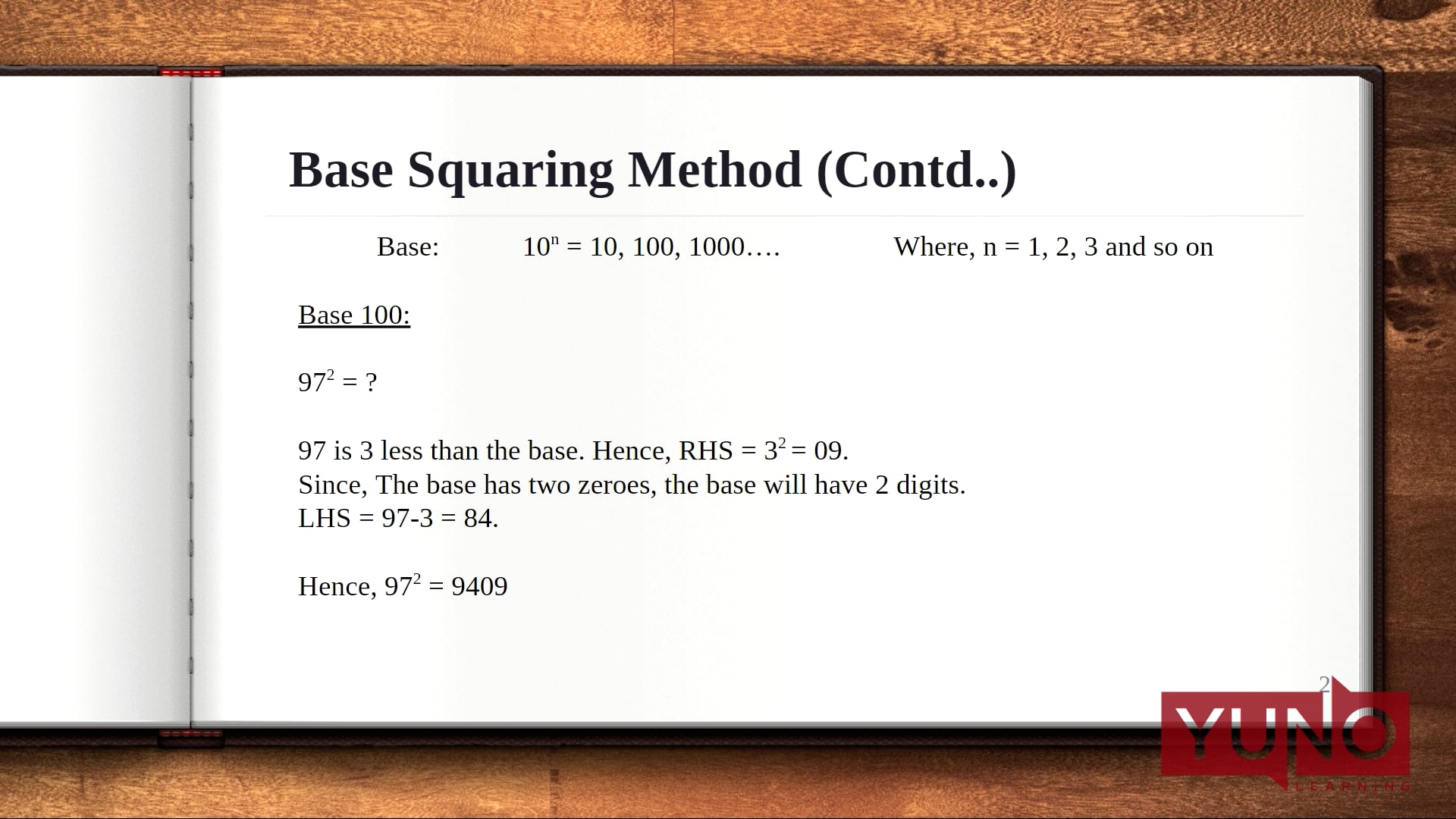
In this video of Vedic Math, we will be learning a new method of finding the square of a number. This method is called the Base Squaring Method.

In this video of Vedic Math, we will be learning a new method of finding the square of a number.

This method helps us to calculate the square of 2 digit numbers. Kids from the age group 7 years and above are easily able to learn this method.
This method is derived from Vedic Maths, and is used to find the square of a number which is closer to number 50 or 100.
In this video of vedic maths, we will be learning how to calculate the square roots and cube roots of a number by just looking at them.

This Vedic Maths tricks are very useful in school, maths and competitive exams. Children from the age group 7 years and above can learn it.
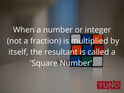
This Vedic Maths worksheet tests you on our knowledge on the different sutras and methods that help you calculate the square of a number.
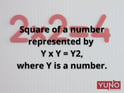
This Vedic Maths worksheet deals with part 1 of the methods that help us to calculate the square of any number. Let's revisit!
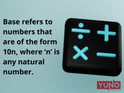
This Vedic Maths worksheet deals with part 2 of the methods that help us to calculate the square of any number. Let's revisit!
This Vedic Maths worksheet deals with the sutra called Duplex Method that helps one calculate the square of numbers. Let's revisit!
This worksheet deals with the methods that helps in the calculation of the square of numbers that are close to 50 amd 100. Let's revisit!
This practice worksheet deals with the methods derived from Vedic Maths sutras that help in the calculation of the square any two digit number.
This practice worksheet deals with the Vedic Maths sutras that help in the calculation of the square root of perfect square numbers.
This practice worksheet deals with the Vedic Maths sutras that help in the calculation of the square root of perfect square numbers.
A cube number is a number multiplied by itself 3 times. This can also be called 'a number cubed'. The symbol for cubed is ³. 2³ = 2 × 2 × 2 = 8. The method derived from Vedic maths used to find the cube of any 2 digit number is very easy and quick.
Moving ahead, cube root of a number can be explained as a number x is a number y such that y³ = x.
This method derived from Vedic Maths is used to find the cube of any 2 digit number when digits are the same.

In this video of Vedic Math, we will see and learn a trick to find the cube of a two digit number in less time and with accuracy.

A cube number is a number multiplied by itself 3 times.This method derived from Vedic maths is used to find the cube of any 2 digit number.
In this video of vedic maths, we will be learning how to calculate the square roots and cube roots of a number by just looking at them.

This video lecture, covers detailed yet easy, and one of the fastest steps to find the cube root of the perfect cube number.
This practice test will help you polish your knowledge of the method that helps you sum the cube of any 2 digit number when the digits are same.
This practice worksheet deals with the Vedic Maths technique that enables one to quickly calculate the cube root of any two digit number.
This practice worksheet deals with the Vedic Maths technique that enables one to quickly calculate the cube root of any perfect cube number.
This practice worksheet deals with the Vedic Maths technique that enables one to quickly calculate the cube of any two digit number.
This practice worksheet deals with the Vedic Maths technique that enables one to quickly calculate the cube of any two digit number.
Algebra is a branch of mathematics which helps in the visual representation of problems or situations in the form of mathematical expressions. The said mathematical expression is made up of variables like x, y, z. To find the value of these variables, one must apply mathematical operations like addition, subtraction, multiplication, and division to form a meaningful mathematical expression.
In this video, we will be learning about the concepts of Vedic Math that can be applied in Algebra.

In this video, we will be learning about the concepts of Vedic Maths that can be applied in Algebra of Type 1 of Smple Equations.
In this video, we will be learning about the concepts of Vedic Maths that can be applied in Algebra of Type 2 of simple equations.
In this video, we will be learning about the concepts of Vedic Maths that can be applied in Algebra of Type 3 of simple equations.

In this video, we will be learning about the concepts of Vedic Maths that can be applied in Algebra of Type 4 of simple equations.

In this Vedic Maths video, we will be learning about the concepts of Vedic Math that can be applied in Algebra for Type IV of equations.
In this Vedic Maths tutorial, we will be discussing the Sunyam Sutra of Algebra.
This Vedic Maths algebra tutroial, Sunyam Sutra and its 1st meaning.
In this Vedic Maths tutorial, we will discuss about the 2nd meaning of the Sunyam Sutra in Algebra.
In this Vedic Maths, we will be discussing the 3rd meaning of the Sunyam Sutra.
In this Vedic Maths tutorial, we will be discussing the 4th meaning of the Sunyam Sutra.
In this Vedic Maths tutorial on algebra, we will be understanding the fifth meaning of the sutra Shunya Samyasaamuchhye.
In this Vedic Maths tutorial on algebra, we will be understanding the sixth meaning of the sutra Shunya Samyasaamuchhye.
In this Vedic Maths tutorial on algebra, we will be understanding some deviations in the meaning of the sutra Shunya Samyasaamuchhye.
In this Vedic Maths tutorial on algebra, we will understand some deviations (thick disguise) of the meaning of the sutra Shunya Samyasaamuchhye.