video
Introduction to Parts of Speech
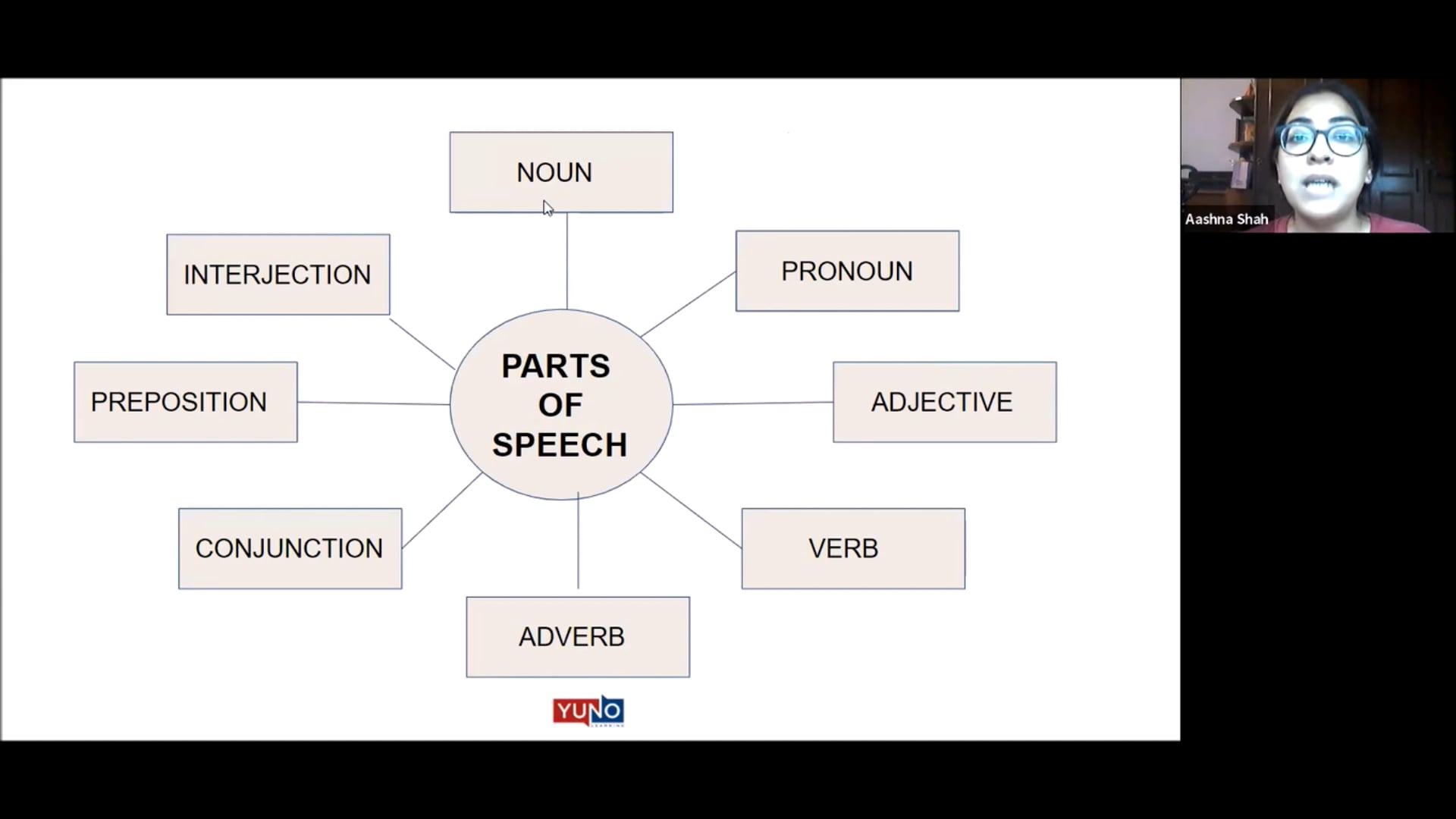
We can categorize English words into 9 types called "parts of speech" or "word classes". It's quite important to recognize parts of speech.
Learning English grammar is essential if you want to convey your thoughts or ideas effectively whether via written or spoken communication.
For instance, if you are a working professional, it’s important for you to make sure that your written business communication is grammatically correct. Correct grammar and appropriate usage of punctuation helps you build a good reputation with your clients and colleagues.
On the other hand, if you are planning to take a competitive exam where grammar skills are also tested among other areas then getting yourself acquainted with English grammar exercises becomes essential for achieving a high score.
And on a lighter note, do you know according to a study bad grammar is a major turn off for many online daters. This clearly indicates that people want to be with someone who knows how to communicate clearly and learning grammar can help you do that.
Grammar is a tool that provides us an insight into how a language works. It helps us understand why and how native English language speakers structure their sentences the way they do.
Knowing grammar concepts will help you avoid those silly errors that make your English sound strange to native speakers.
Studying grammar with the help of English grammar videos can indeed help you become a better communicator.
These English grammar exercises online will help you study grammar more efficiently by focusing on the concepts that are most important to you. Read on!
The fundamental building block of every language is the word and words are classified into parts of speech, depending how they have been used in a sentence and what's their function.
There are eight parts of speech:
Understanding parts of speech is essential if you wish to construct good and meaningful sentences. Watch our English grammar videos to learn more about parts of speech.
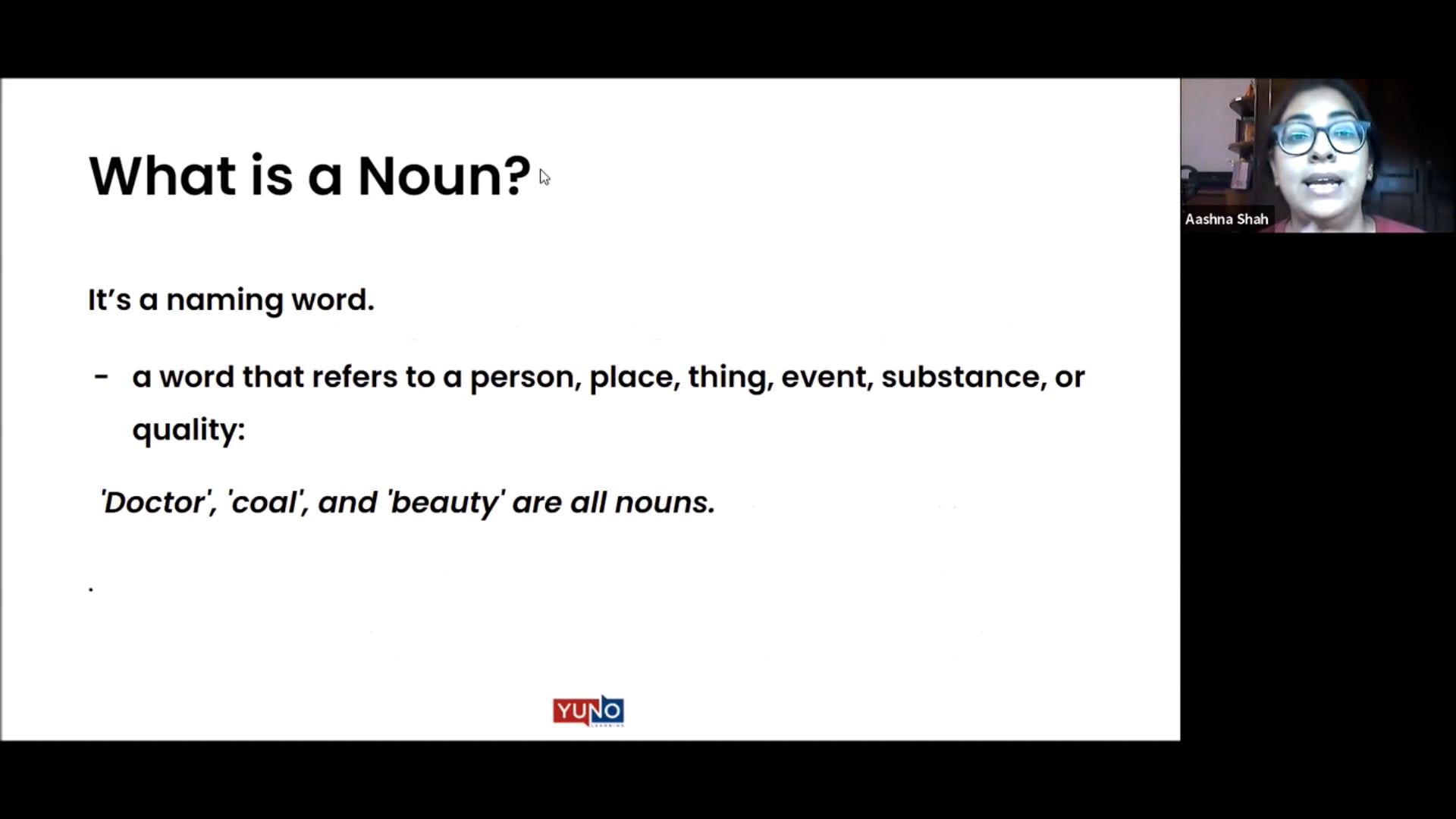
A Noun is a word used to represent a person, a place, an animal, a thing, or an idea. Nouns are simply naming words.
Person: man, woman, Rita
Place: garden, home, India, Disneyland
Animal: dog, cat
Thing: shoe, ring, soap, ball
Idea: happiness, anger, information
Types of Nouns
Proper Nouns
A proper noun is a specific name of a person, place, or thing, and is always capitalized.
Paris is the name of a specific place and Mark is the name of a specific person. So, they are proper nouns which is why they are capitalized as well
Common Nouns
A common noun is the generic name of an item in a group. It is not capitalized unless it appears at the beginning of a sentence.
Collective Nouns
A collective noun refers to the collection of the same type.
Example: army, police, group, team, audience, cattle, herd etc.
Material Nouns
A material noun is the name of a thing that is used to make something.
Example:
Abstract Nouns
Abstract nouns refer to ideas and concepts such as victory or failure. We cannot perceive them using one of our five senses. They cannot be seen, heard, tasted, touched, or smelled.
Example: kindness, honesty, idea, hockey etc.
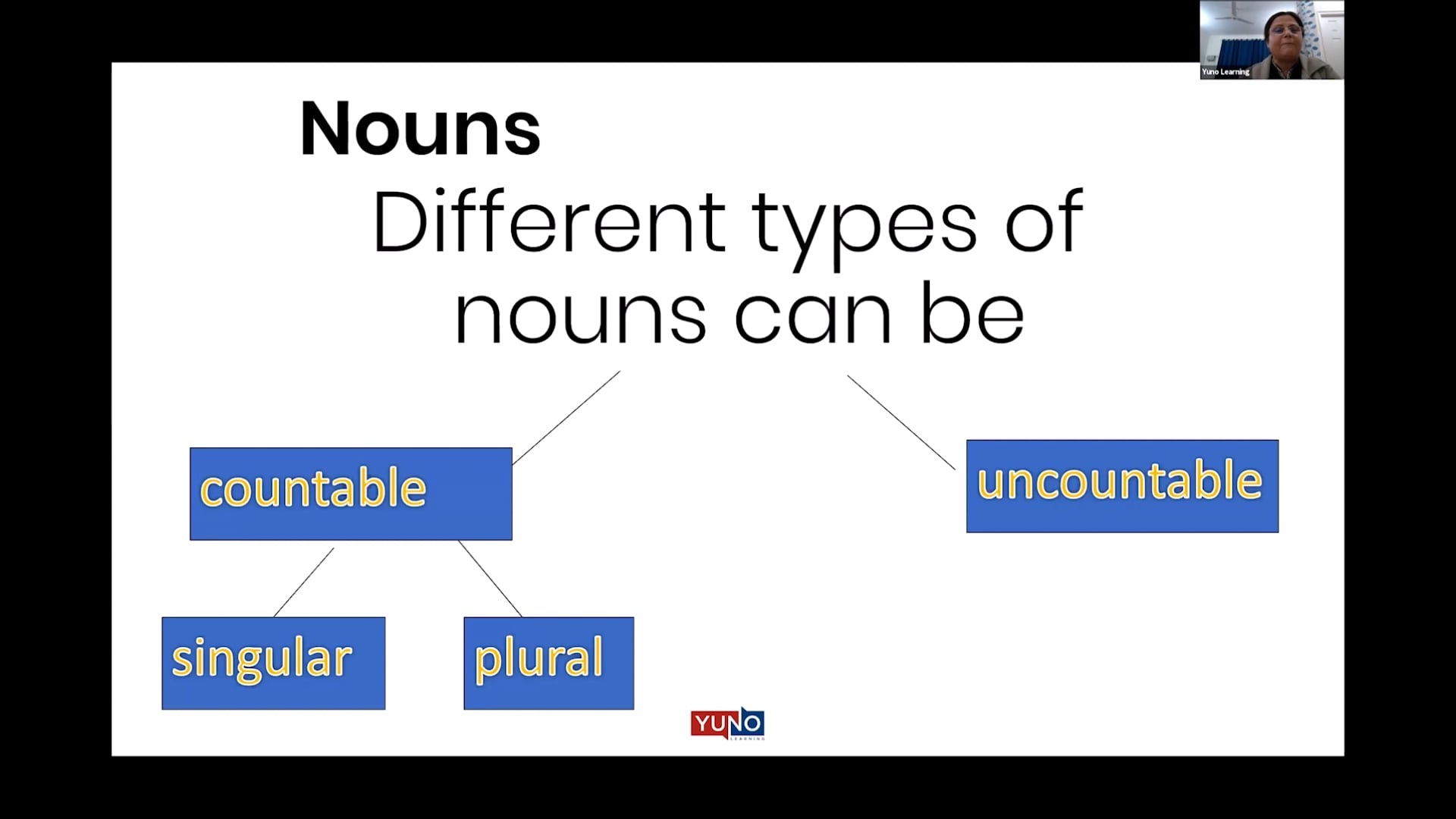
Different types of nouns can be countable or uncountable.
Countable nouns vs. uncountable nouns
Countable nouns are the things we can count. For example: apple, chair, kid, cup. We can count all these items easily.
In contrast, uncountable nouns are substances which cannot be counted. We cannot count them. For example, we cannot count "sugar" or “milk”. We can count “cups of sugar” or "bottles of milk"/"liters of milk".
Example: knowledge, information, water, sugar etc.
Download our free English grammar pdf to practice Nouns now!
A Pronoun is a word used in place of a noun.
Various kinds of Pronouns:
Personal pronouns: These are words which are used as a simple substitute for the proper name of a person or thing such as: I, me, you, him, her, they etc.
Reflexive & Emphasizing pronouns: These pronouns refer back to a person or thing. These are words like myself, yourself, himself, herself, itself, ourselves, yourselves and themselves. Notice they end in “-self” or “-selves”.
Indefinite pronouns: These pronouns do not refer to a specific person, place, or thing. We use them to refer to people or things without saying exactly who or what they are. The most common ones are: all, any, anyone, anybody, somebody, everything, few, some, several etc.
Demonstrative pronouns: These words are used to point to specific people or things. They indicate which entities are being referred to. Such as “this chair” or “that man”.
Interrogative pronouns: These pronouns are used to ask questions. There are five interrogative pronouns: what, which, who, whom, and whose.
Relative pronouns: These pronouns are used to connect a clause or phrase to a noun or pronoun. The most common are who, whom, whose, which, that.
Want to know more about Pronouns? Attempt our English grammar exercises online.
This video lecture is all about pronouns. A pronoun is a word that is used instead of a noun or noun phrase such as he, she, it, they etc.

‘That’ and ‘which’ are two very simple words/pronouns with, which almost every speaker of English is familiar.
Usually, a relative pronoun, like other pronouns, qualifies or modifies a noun or noun clause. It links a phrase or a clause to a noun.
Reflexive pronouns, are ‘self’ words which like a mirror reflect the action done by the subject on himself/ herself.
Indefinite pronouns refer to one or several unspecified objects, humans, or places.
Pronouns that distribute or spread the effect of verbs on multiple persons or articles are called ‘Distributive Pronouns’.
Demonstrative pronouns are used to denote anything specifically that has been previously talked about or is understood from context
Personal pronouns are the words that denote names of a particular person, animal, or an object.

What is a Pronoun? A pronoun is a word that refers to a noun! Watch to learn about Pronouns, its types and how to use them with examples.
A verb is a word that is used to express an action or a state.
There are two different kinds of verbs: Action verbs and Linking verbs.
An action verb is a verb that describes an action, like run, jump, eat, cry, smile, or think. Look at the following examples:
Here, “made” and “wrote” are action verbs, they denote some sort of activity.
Now besides expressing an action, a verb can also express what somebody or something is. Such verbs are called Linking verbs. They act as a connection between a subject and further information about that subject. Examples of linking verbs include: to be, to become, and to seem.
Here, “is” a linking verb, it connects the subject, Rick, with rest of the information about him. It expresses “a state of being”.
Here, “smelled” is the linking verb.
Verbs are the hearts of English sentences. A verb is the part of a sentence that tells us what the subject performs. Watch to know more.
A verb is a word which is used to express an action or a state. Verb tense expresses the time of an event or action.
Watch this video from our expert spoken English trainer to learn how to elevate simple sentences using Phrasal Verbs.
Modal verbs are words which indicate possibility, ability, request, permission, order, intent, or necessity.
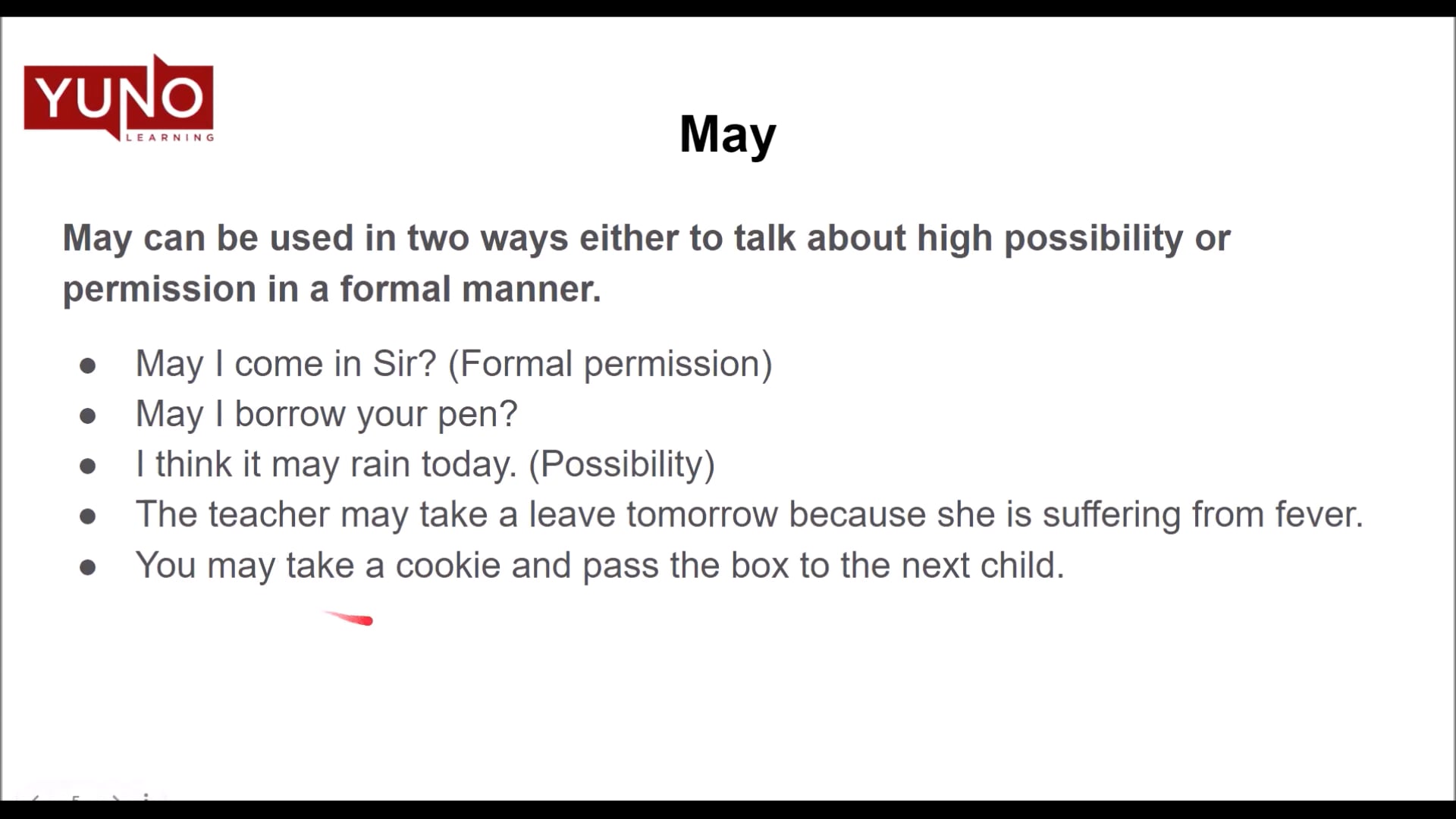
Know all about Verbs Modals! Verb modals are used before ordinary verbs and express permission, possibility, certainty and necessity.
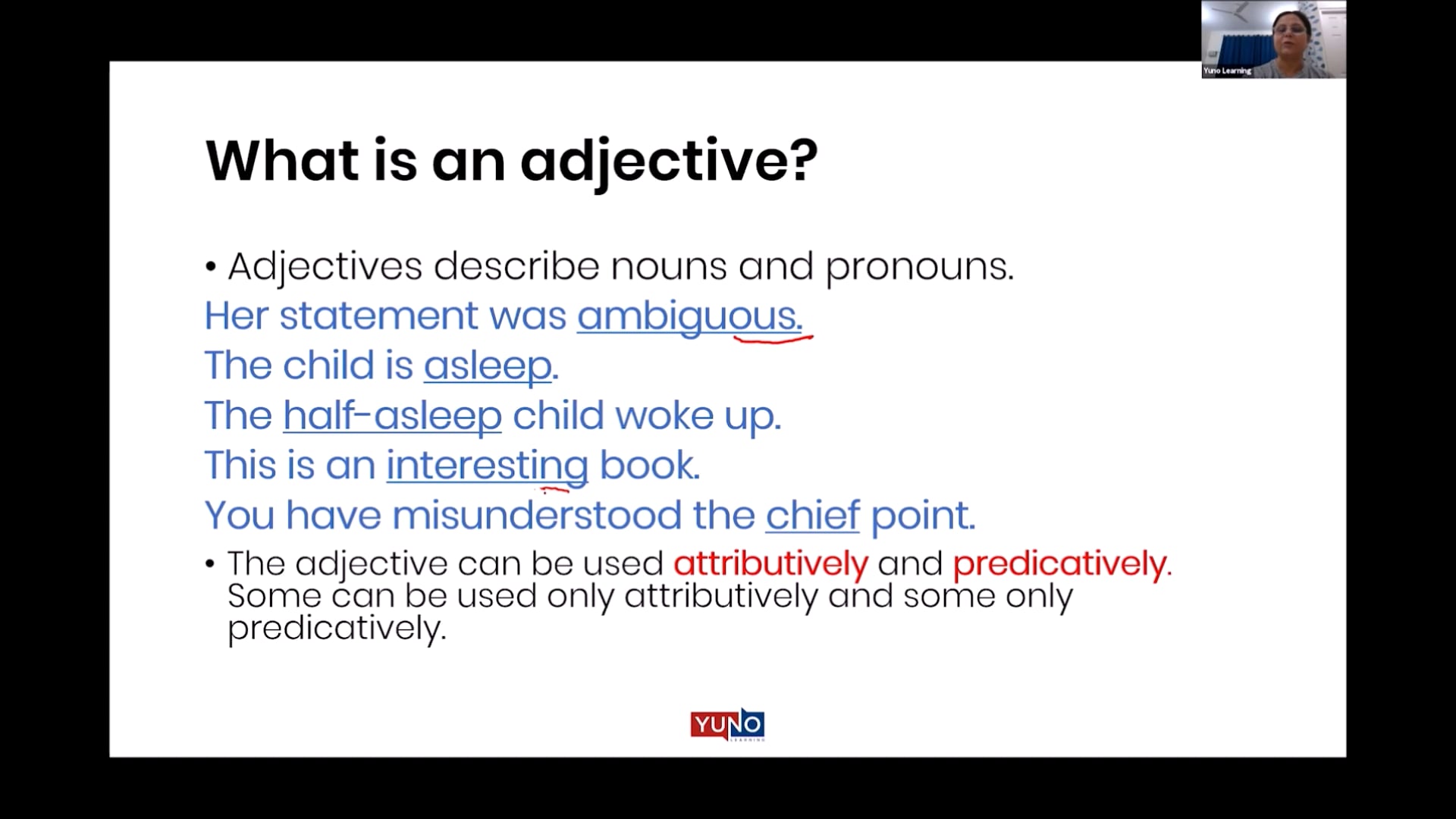
An Adjective is a word that describes a noun or pronoun.
For instance,
Adjectives play two distinct roles - noun modifiers and predicate adjectives.
In simple words, as noun modifiers, adjectives always precede the nouns they modify, and as predicate adjectives, adjectives follow linking (descriptive) verbs and describe the subject.
Adjectives as noun modifiers
Adjectives as predicate modifiers
An Adverb is a word used to add detail to the meaning of a verb, an adjective or other adverbs.
By far, the most common use of adverbs is to modify verbs.
Here are some examples:
In these examples, yesterday and carefully are adverbs that are modifying the verbs.
Adverbs can also modify adjectives.
In these examples, the underlined adverbs completely and terribly are modifying adjectives false and cold.
Adverbs can also modify other adverbs.
Here, the underlined adverbs “very” and “rather” are modifying other adverbs promptly and fiercely.
A Preposition is a word used with a noun or pronoun to show how the person or thing denoted by the noun or pronoun stands in relation to something else.
For instance,
Prepositions are always bound together with their objects and can never be used in isolation, as a single word.
There are mainly three types of Prepositions:
Prepositions of Place: These prepositions are used to refer to a place where something or someone is located.
Prepositions of Time: These prepositions allow you to discuss a specific time period such as a date, one of the days of the week, or the actual time something takes place. They are the same words as prepositions of place, however they are used in a different way.
Prepositions of Direction: These prepositions tell us about the way a person or thing moves or is directed, in relation to other people and things.
She drove right past the store.
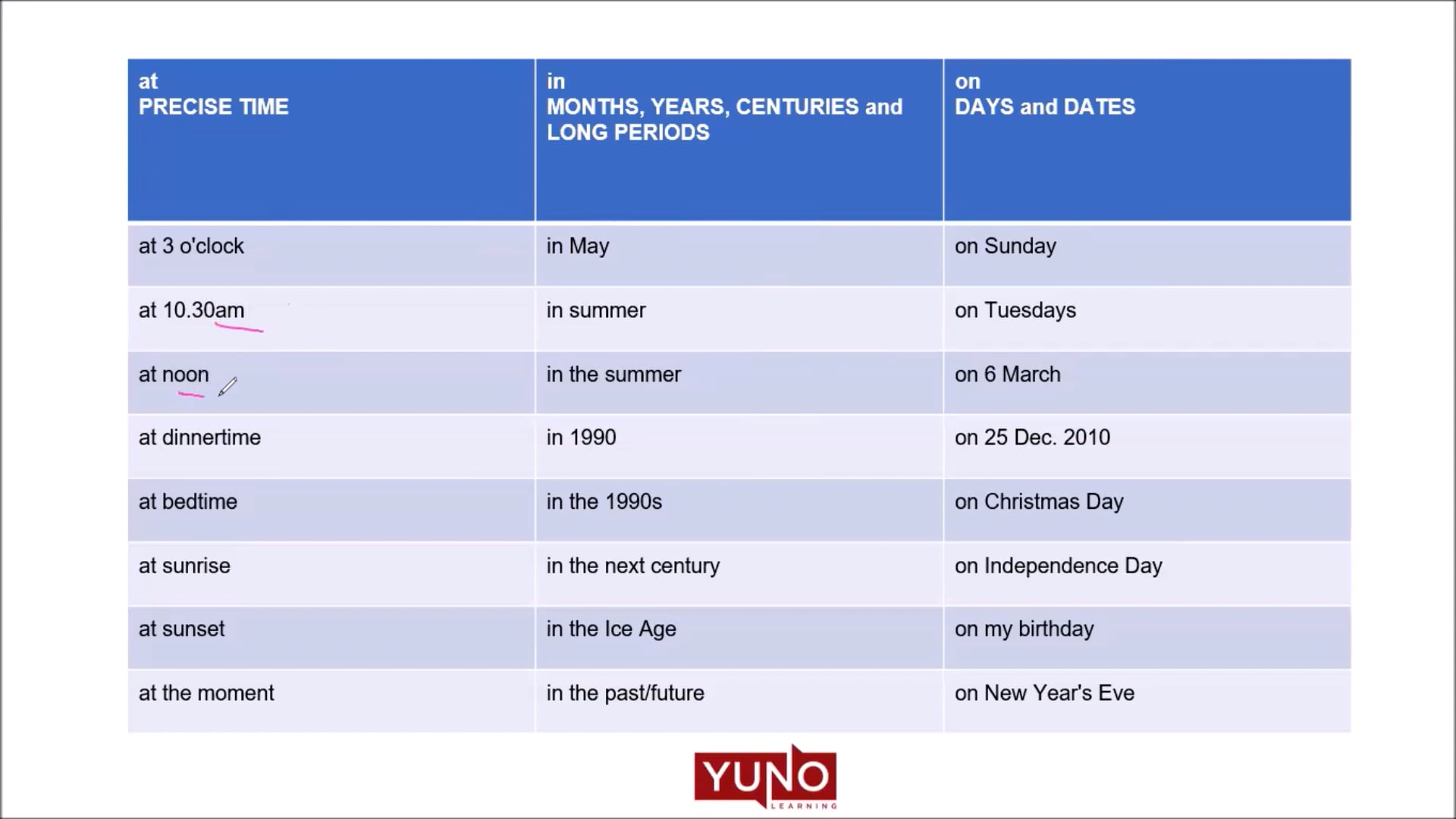
A preposition is a word or group of words used before a noun, pronoun. Prepositions indicate relationships between other words in a sentence.
What are Prepositions of Place? Prepositions of Place show the position or location of one thing with another.
A preposition that contains two or more prepositional words is called a compound preposition. Also, we can say it is a combination of words.
A Conjunction is a part of speech that links words, phrases or clauses together. Some examples of conjunction are words such as “and”, “but”, “although”, and “because”. Conjunctions allow you to form complex and elegant sentences. Without them you’d have to express every idea in a series of simple sentences.
There are three kinds of conjunctions: Coordinating, Subordinating and Correlative.
Coordinating conjunctions help you to connect words, phrases and clauses that are grammatically equal or similar. There are seven main coordinating conjunctions in English, which form the acronym FANBOYS: for, and, nor, but, or, yet, and so.
Subordinating conjunctions are used to join independent and dependent clauses. Common subordinating conjunctions are because, since, as, although, though, while, and whereas.
Correlative conjunctions are pairs of conjunctions that work together. Some examples are either/or, neither/nor, and not only/but also. These pairs of conjunctions require equal (parallel) structures after each one.
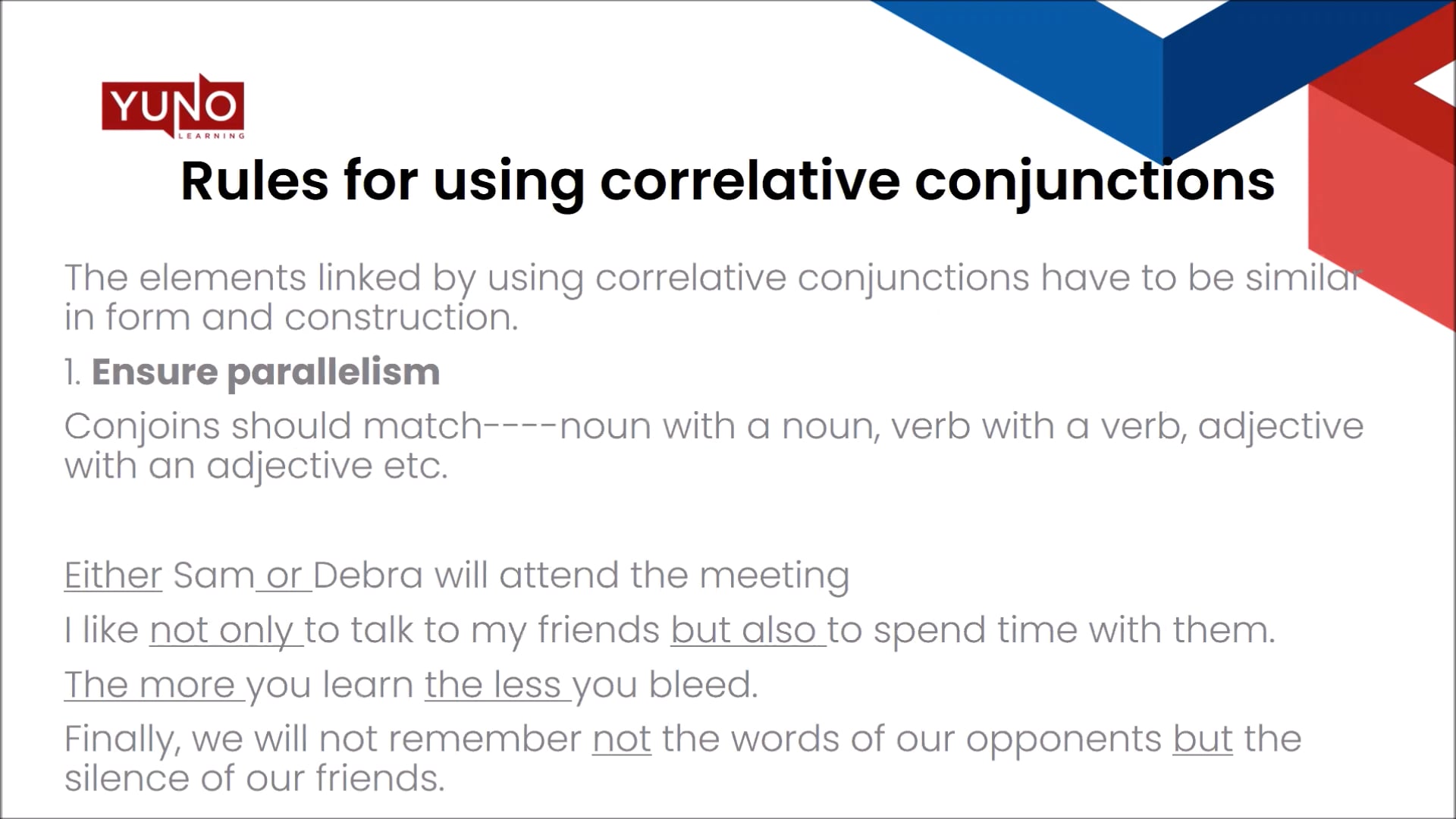
Correlative conjunctions are word pairs like either...or, neither…nor, not only…but also etc. which are usually used in pairs.
Conjunctions are the different adhesives that we use to join the clauses. Some common conjunctions are - but, and, although, since, because etc.
Interjections are one of the 9 parts of speech. An interjection is a word or phrase which is used to express emotion. It has no grammatical connection to the sentence. An interjection is sometimes followed by an exclamation mark (!) when written. Look at the following examples:
In these sentences: Wow, Hey, Ouch, Well are interjections. There’s no strict rule about where an interjection must go in relation to other sentences. You can use an interjection before or after a sentence that explains what’s going on.
A sentence is a group of words that makes complete sense. The subject in a sentence is the person, place, or thing and represents what or who the sentence is about.
There are six types of Basic Sentence structures in English.
Sentence Structure : Various ways in which basic parts of a sentence can be combined and arranged to formulate grammatically correct sentences.
An object is the part of a sentence that gives meaning to the subject’s action of the verb.
An affirmative sentence is one that simply states a fact or situation. These types of sentences affirm the information they state.
For example:
Negative sentences, on the other hand, negate the information they state.
For example:
How to make sentences negative?
An affirmative sentence can be made negative by adding the word “not” after the finite verbs such as : be(is, am, are, was, were), have, can, shall, will, may, must, ought.
For example:
Affirmative: She is eating.
Negative: She is not eating.
Affirmative: I have a laptop.
Negative: I don’t have a laptop.
Affirmative: I walk daily.
Negative: I do not walk daily.
Affirmative: Close the window.
Negative: Do not close the window.
The subject and verb in a sentence must agree to make sense. In the present tenses the subject can take the verb with or without ‘s’ ending. The base form is used with ‘s’ ending for third person singular subjects.
For example:
However, it’s not that simple. It can get tricky depending on the complexity of the sentence.
For example, Sometimes there are two subjects joined by words such as along with, as well as, besides, etc. In such cases the verb agrees with the first subject.
For example:
The chief guest, along with the bodyguards, is expected to arrive at 9:00 pm.
The students, along with the teacher, are here.
Conditionals, also known as if clauses, are used to speculate what could or might have happened and what we wish would happen. They describe the result of a certain condition.
For example: If you work hard, you will succeed.
The if clause (if you work hard) tells us the condition and the main clause (you will succeed) tells the result.
Conditional sentences are divided into different types:
First conditional: We use the first conditional when we talk about present or future situations where the situation is real.
For example: If he comes tomorrow, we’ll go out.
Structure: If + Present simple >> will + infinitive
Second conditional: The second conditional is used to talk about a hypothetical situation and its probable result. These sentences are not based on fact.
Structure: If + Past Simple >> would + infinitive
For example: If I won the jackpot, I would buy a house.
Third conditional: The third conditional refers to an unreal condition in the past and its probable result.
Structure: If + Past Perfect >> would have + past participle
For example: If I had bought a house with a garden, I would have planted lots of flowers.
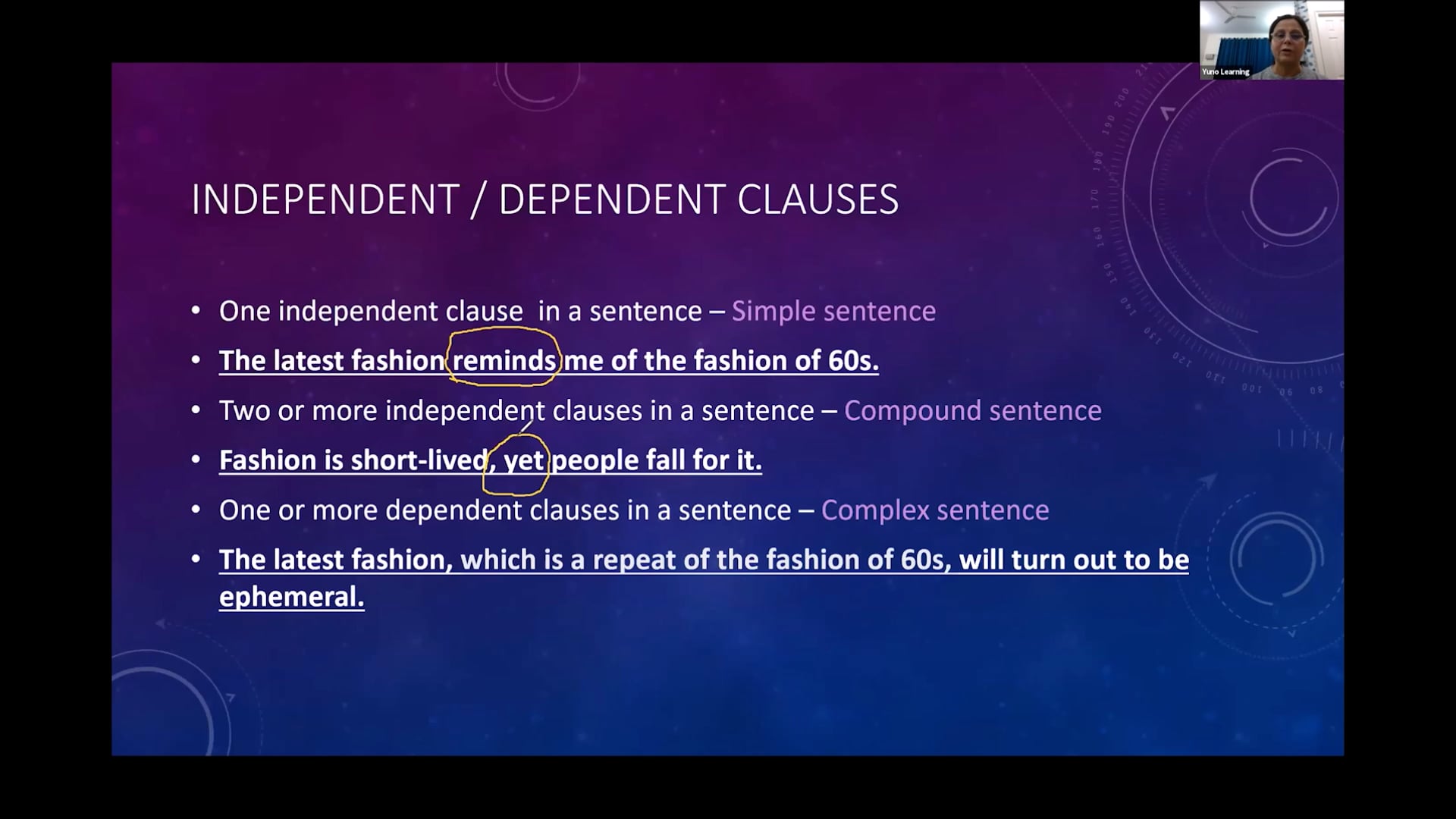
A sentence can be mainly of three types depending on the number and type of clauses it contains: Simple, Compound and Complex.
What is a clause?
A clause is a group of words that includes a subject and a predicate.
For example: He was eating a pizza. (This is a clause which makes a complete sentence in itself).
An independent clause contains a subject, a verb and expresses a complete thought.
For example: He was sleeping.
A dependent clause, on the other hand, contains a subject, a verb and doesn’t express a complete thought.
For example: when his mother called (This clause doesn’t express a complete thought)
Simple Sentences: A simple sentence consists of only one clause, more specifically, an independent clause.
For example:
Compound Sentences: A compound sentence consists of two or more independent clauses joined by a
For example:
Complex Sentences: A complex sentence is formed by adding one or more subordinate (dependent) clauses to the main (independent) clause using conjunctions and/or relative pronouns.
For example:
Present Tenses
Present Simple: This tense is used to talk about present habits, daily routine, general facts and scheduled things. It is also used in if clauses while talking about future events.
Present continuous: This tense is used to talk about an action momentarily in progress, temporary habit or routine. It is also used to refer to future time if it is based on present planning or situation.
Present perfect: This tense is used to talk about a state or happening which was in the past and is present even now or about indefinite or recent past.
Present perfect continuous: This tense is used to talk about an activity or state that has continued from the past till present or to suggest that the results of an activity started in the past remain in the present.
Past Tenses
Past Simple: This tense is used to talk about past fact/ habit/ one time or a series of completed actions in the past. It is also used in if clauses while talking about hypothetical future events.
Past Continuous: This tense is used to talk about activities in progress at a particular time in the past.
Past Perfect: This tense is used to talk about an activity or state that got over by a certain time in the past or one event following another in the past. It is also used in if clauses while talking about hypothetical past events.
Past Perfect Continuous: This tense is used for an activity or state which continued for some time till something else happened.
Future Tenses
Future Simple: This tense is used to talk about future predictions or events which are seen as absolutely certain or things that we think or suppose or things we decide at the time of speaking.
Future Continuous: This tense is used to talk about a future event which will take place as a matter of fact in the near future or an activity in the near future based on present planning.
Future Perfect: This tense is used to talk about an event or state that will be over by a particular time in the future.
Future Perfect Continuous: This tense is used to talk about an event that started in the past - is in progress now - and will continue even at a certain time in the future:
Check out our tenses exercises online to practice them and improve your English.
Learn from our expert instructor how should you communicate about present events and situations.
At times we are required to talk about past events or situations. So, how should you communicate about past?
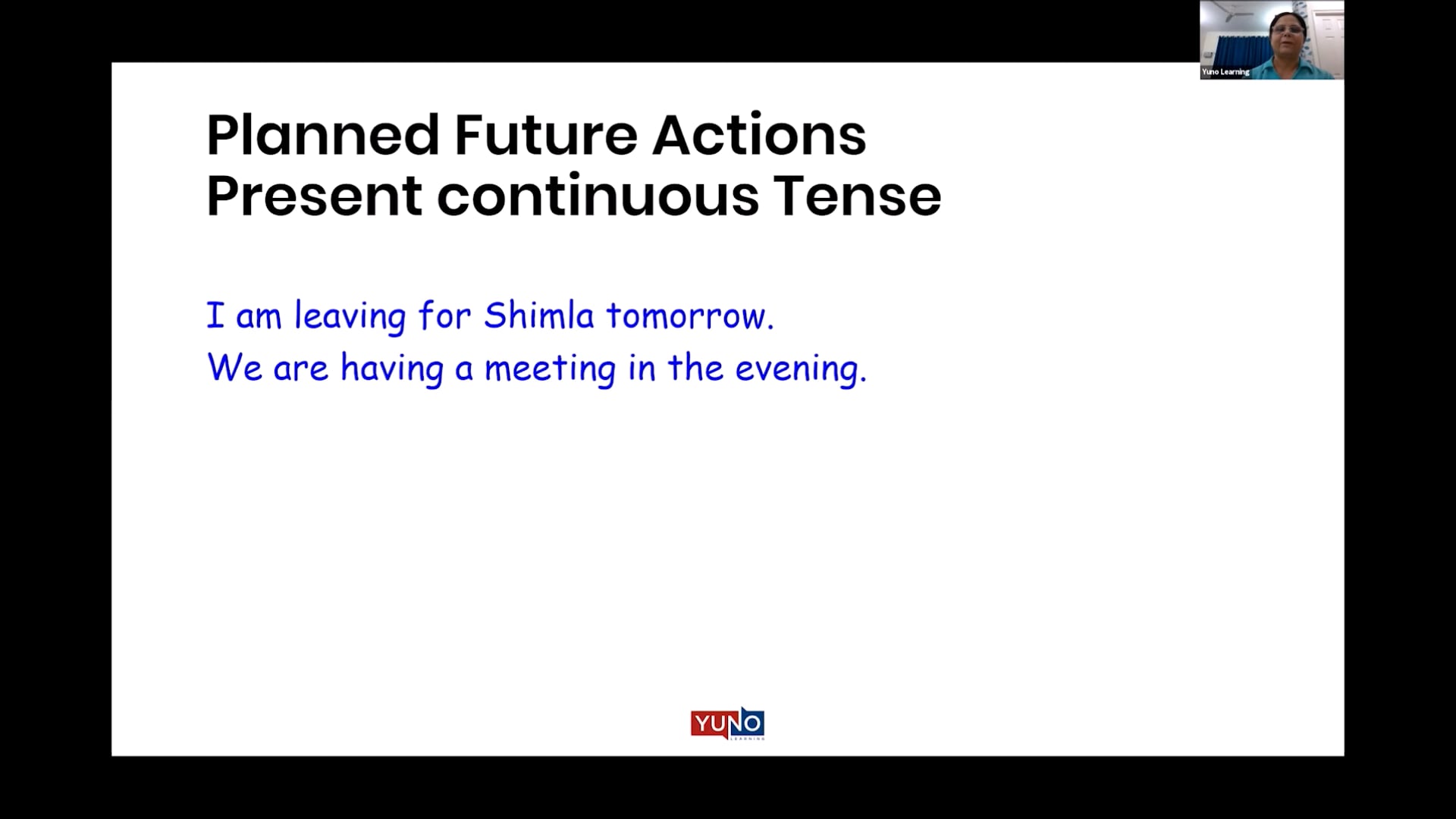
The present continuous tense is used to talk about a planned action to be performed in the future.
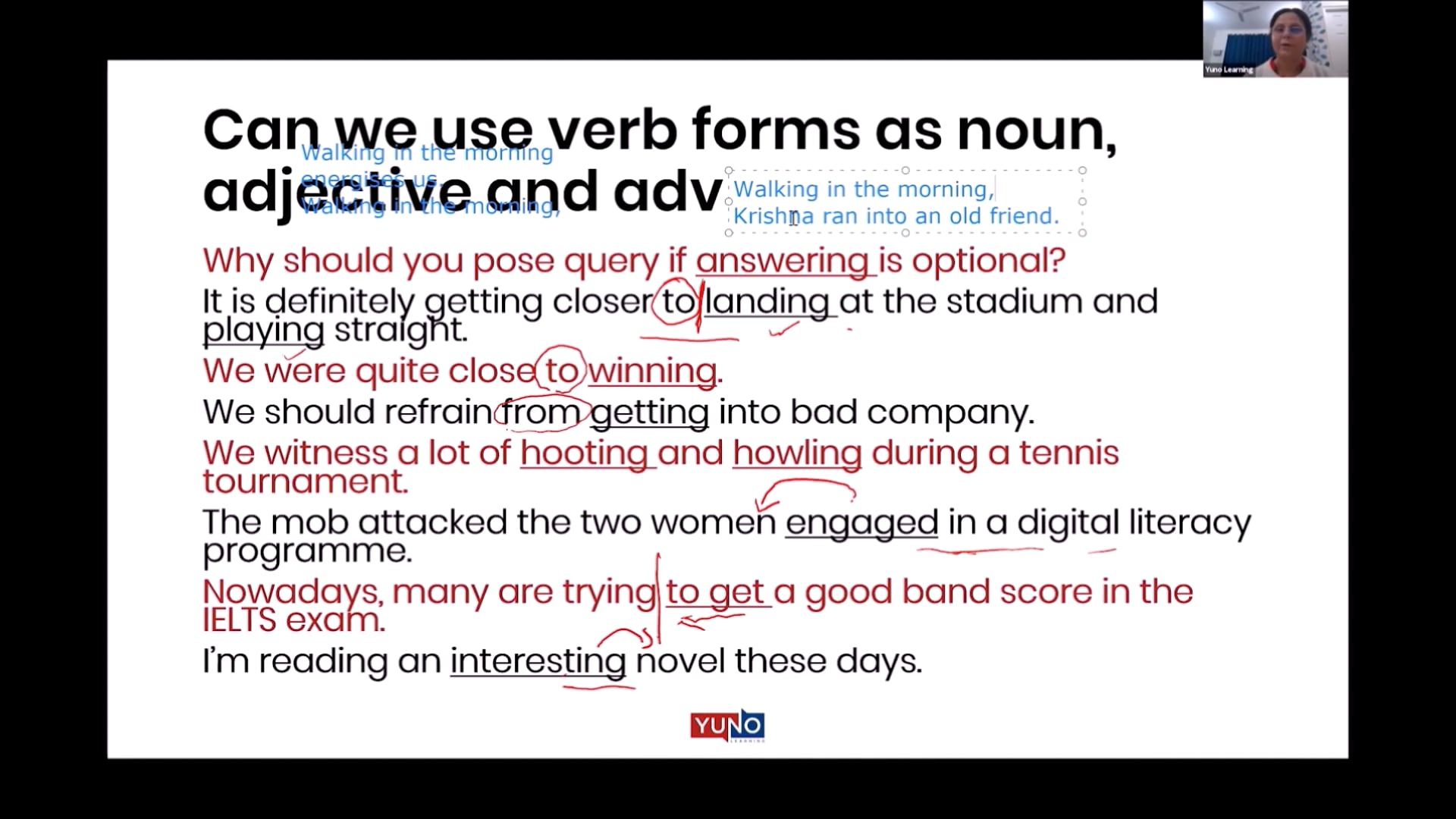
A non-finite verb is a form of the verb that does not show the tense. Therefore, it can never stand alone as the main verb in a sentence.
There are three types of non-finite verbs: gerunds, participles, and infinitives.
Gerund: When the …ing form of the verb is used as a noun, it is called a Gerund. Like a noun, it can be used as the subject, subject complement, object of the verb and object of the preposition in a sentence.
For example:
The words in bold - dancing, swimming and driving are gerunds.
Participle: When the present and past participle form of the verb is used as an adjective, it is called a Participle.
For example:
Infinitive: The infinitive is the base form of a verb, usually preceded by to. For example: “to go” is an infinitive. It can be used as a noun, adjective and adverb.
For example:
Articles are words that modify nouns and show whether that noun is specific or unspecific.
In the English language, there are two types of articles: Definite & Indefinite.
Indefinite Article:
There are two indefinite articles - ‘a’ and ‘an’. They are used to modify non-specific or non-particular nouns. They refer to any member of a group. ‘A’ is used before the words starting with a consonant sound, and ‘An’ is used before the words starting with a vowel sound.
For example:
Definite Article:
The is used to refer to specific or particular nouns.
For example:
Comparative adjectives are used to make or show comparisons between two objects. They help us to describe the differences.
For example:
There are two ways to form a comparative adjective.
For example:
A clause is a group of words including both a subject and a predicate.
Example:
Subject - It
Predicate - is raining heavily.
Subject - I
Predicate - look forward to hearing from you
There are two types of clauses: Independent and Dependent clauses.
Independent clause: An Independent clause contains a subject and a verb and expresses a complete thought. It can stand alone as a simple sentence.
For example:
Dependent clause: In contrast, a dependent clause is a group of words that contains a subject and verb but does not express a complete thought. A dependent clause cannot be a sentence. They are also called subordinate clauses.
To turn a dependent clause into a full sentence, it needs to be combined with an independent clause.
Dependent Clauses can perform three main functions: They can function as adverbs, adjectives, or nouns.
Noun Clauses
Noun clauses are dependent clauses that can function as nouns in sentences. So, a noun clause allows an entire phrase to be considered as subject or object in a sentence.
Adjective clauses
Adjective clauses are dependent clauses that modify or describe nouns or pronouns. Adjective clauses almost always come right after the nouns they modify.
Adverb clauses
Adverb clauses are dependent clauses which function as an adverb, which means the entire clause modifies a verb, an adjective or another adverb.
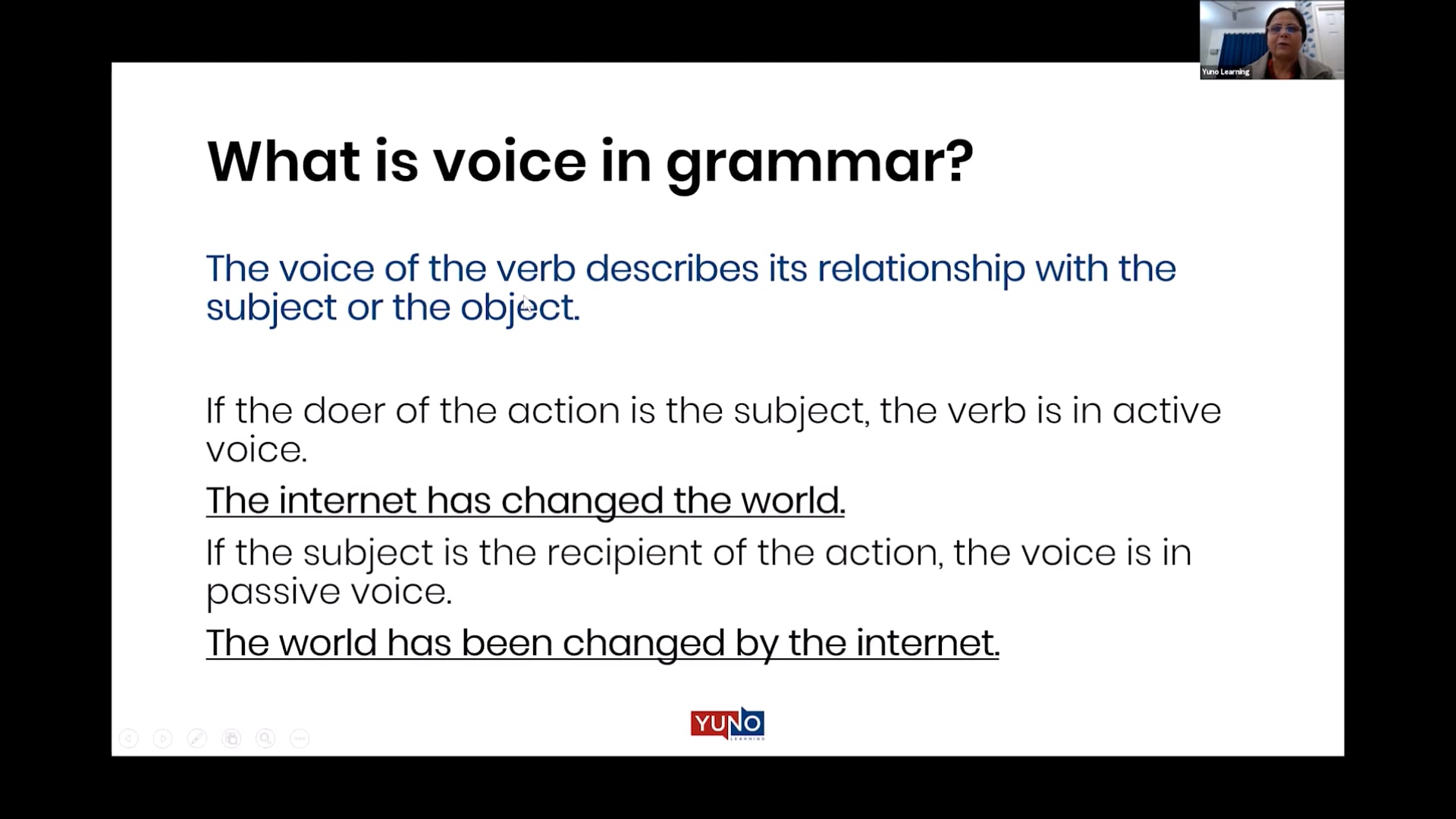
Active Voice
A sentence is in active voice when its subject performs the action. The active voice emphasizes the performer of the action which makes the sentences in active voice clear, direct and concise.
Active voice follows a clear structure: Subject + Verb + Object
For example:
Passive voice
A sentence is in passive voice when the subject receives the action. The passive voice emphasizes the receiver of the action which makes the sentences impersonal, indirect and wordy.
In passive voice, the object of active voice becomes the subject. Only those sentences, which have an object, can be changed into passive voice.
For example:
Active: Ria broke the glass.
Passive: The glass was broken by Ria.
Active: The cat chased the mouse.
Passive: The mouse was chased by the cat.
Therefore, transforming from active to passive flips the sentence structure and also necessitates the usage of preposition “by” in some cases.
At times we need to tell someone what another person said or what we thought. In order to describe what somebody else said or what we thought, we can use two different types of reported speech: Direct speech and Indirect speech.
Direct speech: We use direct speech when we simply repeat the exact words the person used. For example:
Indirect speech: When we want to report what someone said without necessarily using exactly the same words, we can use indirect speech. In indirect speech, the original speaker’s words are changed. For example:
Hence, while reporting indirectly, use a tense which is 'further back' in the past as done in the example - work changed to worked. Also, make necessary changes with the pronouns. In the example, the pronoun “I” has been changed to “she”.
In indirect speech, present simple changes to past simple, present continuous changes to past continuous, present perfect changes to past perfect and present continuous changes to past perfect continuous. Also, there are changes with words such as can, will, may etc. as will changes to would, “can” changes to “could”, “may” changes to “might”. For example:
A modifier is a word, phrase, or clause that modifies—that is, gives explanation or information about—another word in the same sentence.
Here, the word beautiful modifies or adds detail to the word “dress”. The modifier “beautiful” gives extra information about what kind of dress it is.
There are two types of modifiers: Pre-modifiers and Post-modifiers.
Pre-modifiers modify the words that follow them in the sentence. Conventionally the adjectives are usually placed before the nouns. So, most of the adjectives are pre-modifiers.
Here, the adjective “energetic” is the pre-modifier. It modifies the noun "person," giving details about what kind of person she is.
Post-modifiers come after the words they modify.
The phrase “of a different nature” modifies the word “person”.
Parallelism refers to the repetition of the same grammatical form in two or more similar words, phrases or clauses of a sentence. It is also known as parallel structure or parallel construction. Sentences with parallel structure are easier to read and add a sense of balance to writing.
For instance:
To avoid faulty parallelism, the above sentence can be corrected as:
Some common rules of parallelism
Words, phrases, and clauses in a series should be parallel in grammatical construction.
Words, phrases, and clauses joined by a coordinating conjunction (and, but, or, nor, for, so, yet) need to have parallel grammatical construction.
Words, phrases, and clauses joined by a correlative conjunction (not only... but also, both... and, either... or, neither... nor) need to have parallel grammatical construction.
Words, phrases, and clauses joined by a comparative expression (as much as, more than, less than) need to have parallel grammatical construction.
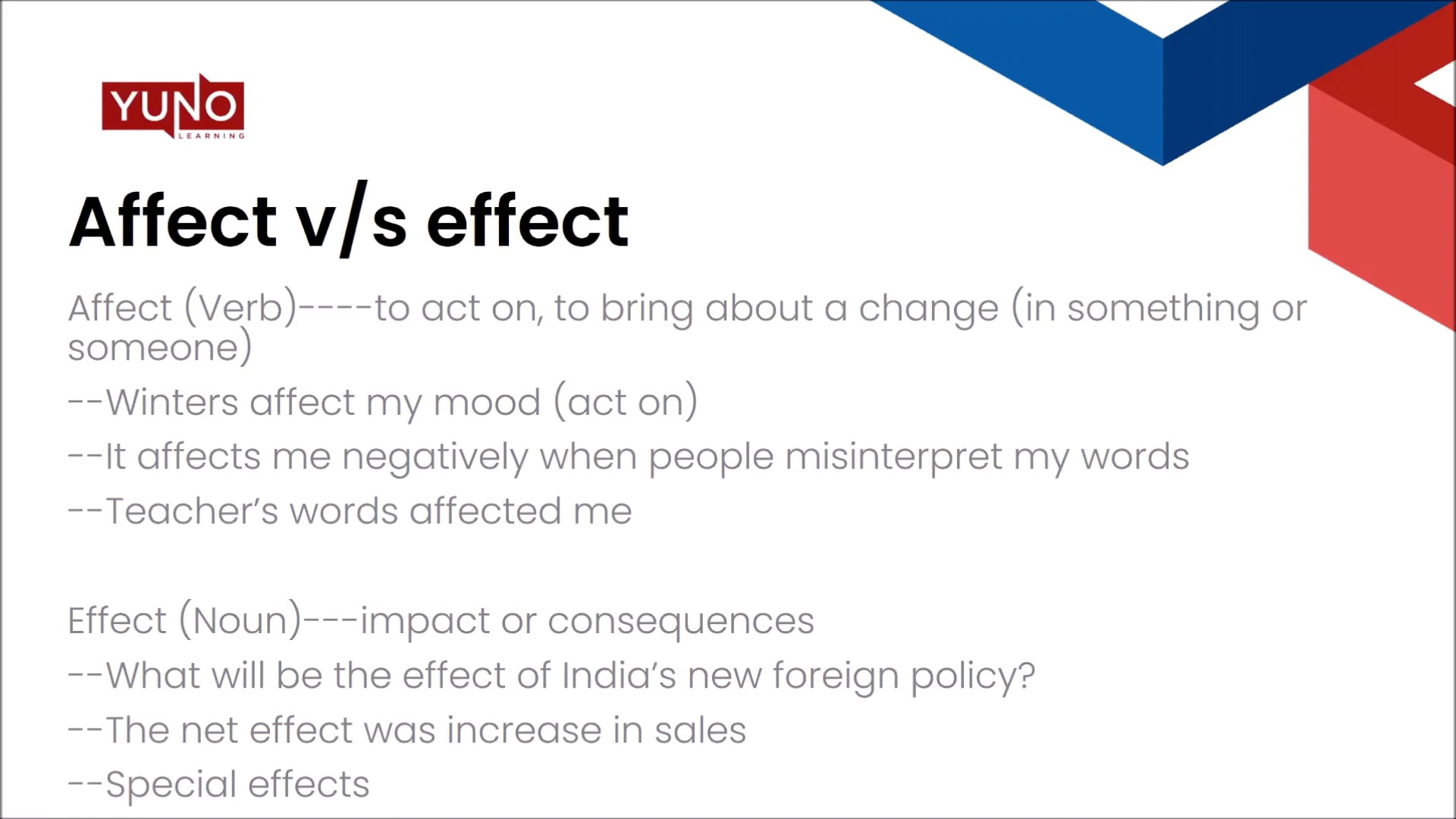
The English language is full of words that sound alike or nearly alike but have different spelling and meanings. At times we get confused and are not certain which one is right, hence, we end up using the wrong word.
For instance - Advice vs Advise
Advice is a noun, but Advise is a verb.
Some other commonly misused words
Accept vs. Except
Accept means to agree or to receive. Except means to leave, take out or not include.
Your vs. You’re
Your is a possessive determiner, while you’re is the contracted form of “You are”.
Complement vs. Compliment
Complement - If something complements another, it means it fulfills the other thing and makes it even better.
Compliment - A compliment is a polite action or remark to express praise or admiration for someone or something.
Conscience vs. Conscious
Conscience - is the moral sense of right and wrong.
Conscious - means to be awake or aware of things happening around you.
Punctuation refers to the system of symbols that we use to separate sentences and parts of sentences while writing. Each symbol is called a "punctuation mark".
While speaking, we make use of pauses and the tone of the voice to express the intended meaning. Punctuation plays the same role in writing. It helps us to make our writing coherent which makes it easier to read and understand. Without punctuation one’s writing wouldn’t make any sense.
The most common punctuation marks in English are: capital letters and full stops, question marks, commas, colons and semicolons, exclamation marks and quotation marks.
Usage of some punctuation marks
Full stops, Question marks, and Exclamation points are used to end sentences.
Comma
Commas are one of the most common punctuation marks. A comma indicates a pause in a sentence, either between phrases, clauses, or items in a list.
Colons and semicolon
A colon helps us to introduce information and give it context in a sentence. A colon can also separate a sentence into two independent clauses.
A semicolon is also an appropriate choice if you want to separate a sentence into two independent clauses.