Why Europe Is the Best Place to Study Psychology-AI Programs in 2026
TL;DR
- Psychology is no longer a “soft” or fallback degree—it is becoming a critical pillar of artificial intelligence and human-centred technology. As AI systems increasingly shape how people think, work, and decide, companies now need professionals who understand human cognition, behaviour, and trust—not just code.
- Leading tech firms like Google, Microsoft, and OpenAI are hiring graduates trained at the intersection of psychology and AI for roles in UX research, human-AI interaction, ethics, and behavioural science, with salaries starting well above traditional tech entry levels.
- Europe has emerged as the strongest training ground for these interdisciplinary careers, offering English-taught master’s programmes that combine cognitive science, AI, and research practice. YUNO LEARNING explains why psychology-AI pathways are future-proof, globally relevant, and especially valuable for Indian students planning beyond traditional tech routes.

“Psychology?!! Isn’t that just for girls — and that too, the kind who are simply passing time before marriage?”
This dismissive question captures a stereotype many Indian students have encountered — sometimes said openly, sometimes implied in conversations about “serious” careers. As a field of study at the college or university level, psychology in India has often been regarded as a soft, feminine, marriage-compatible degree, grouped with “safe” humanities options such as sociology, home science, or English, and contrasted with supposedly tougher, more respectable tracks like engineering, medicine, or the civil services.
This perception has less to do with psychology itself and more to do with how Indian society has historically ranked disciplines according to perceived income security, social status, and marriage-market signalling. Unfortunately, the stereotype has persisted long after it stopped reflecting reality.
Psychology Is a Scientific Discipline, Not a Hobby
In reality, psychology is a rigorous scientific field. University-level study involves research methods, statistics, experimental design, neuroscience, clinical theory, and critical analysis. Many Indian programmes demand quantitative skills, fieldwork, practicums, and original research at both bachelor’s and master’s levels.
Students trained in psychology learn how to design experiments, analyse data, test hypotheses, and interpret complex human behaviour — skills that are neither soft nor trivial. Crucially, these skills are increasingly valuable in a world where technology interacts with human users at every level.
And this is where the stereotype truly collapses.
When Psychology Meets AI: High-Value Roles in Top Tech Companies
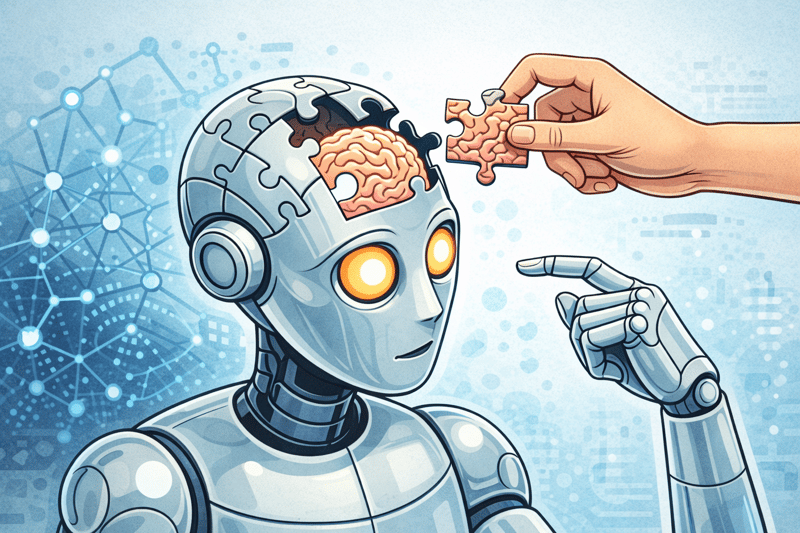
Some of the world’s most prestigious AI and technology companies are actively hiring people with exactly this combination of psychological insight and technical competence. These roles sit at the intersection of artificial intelligence, human behaviour, and decision-making — areas where purely technical expertise is no longer enough.
Examples of employers and roles
Company | Relevant roles | Indicative pay (US/Europe) |
| Google (Alphabet) | UX Researcher (AI/ML), Human–AI Interaction Research | ~$150,000–$220,000 base (entry level) |
| Microsoft | UX Researcher, Human Factors, Responsible AI | ~$140,000+ (role & location dependent) |
| xAI | Research, product, human-evaluation roles | ~$180,000+ |
| OpenAI / Anthropic / Thinking Machines Lab | AI behaviour, evaluation, UX, safety | Senior research hires can earn several hundred thousand dollars |
In the US and parts of Europe, an entry-level hire in these roles at top AI companies can expect base salaries starting around $140,000, with bonuses and equity pushing total compensation higher. Exceptional senior research hires at frontier AI labs can earn far more — but these are not entry-level positions.
The obvious question, then, is: what kind of training makes candidates eligible for such roles — and where can Indian students get it?
Psychology and AI: What’s the Connection?
AI systems are now embedded everywhere — from social media feeds and medical diagnostics to autonomous vehicles, hiring software, and personal assistants. But their success depends not just on algorithms or computing power. It depends on how humans perceive, interact with, trust, and respond to these systems.
This is where psychology becomes indispensable.
Psychology helps us understand:
- Human cognition — how people think, learn, reason, and make decisions
- Behavioural patterns — how behaviour changes in response to new tools
- Social dynamics — how groups interact with technology
- Emotional response — trust, anxiety, resistance, acceptance
AI research and design increasingly rely on these insights to become human-centred and responsible, rather than purely technical. This fusion has created fast-growing areas such as:
- Human–AI interaction and cognitive computing
- Behavioural prediction and decision science
- UX research grounded in psychological models
- AI ethics, trust, and governance
- Mental-health and wellbeing technologies powered by AI
In short, psychology provides the human context without which intelligent systems often fail in the real world.
Why Europe Has Become the Best Training Ground
Until recently, Indian students interested in hybrid psychology–AI careers tended to prioritise the USA and Canada. Immigration uncertainty, rising tuition costs, and policy changes have altered that landscape significantly.
Europe has emerged as a compelling alternative — and not by accident.
European universities have invested heavily in interdisciplinary AI education, producing graduates who are not just coders or psychologists, but integrated thinkers trained to work across domains. Many programmes are taught in English, embedded within strong research ecosystems, and closely connected to industry and public policy.
Below are some of the most relevant programmes for students interested in this pathway.
The Netherlands: A Global Hub for Interdisciplinary AI
The Netherlands has emerged as a leader in interdisciplinary AI research, supported by national initiatives such as the ICAI (Innovation Center for Artificial Intelligence), which actively connects universities, industry, and government.
Tilburg University
MSc in Cognitive Science and Artificial Intelligence
- Duration: 2 years | Language: English
- Focus: AI techniques (deep learning, computational modelling) integrated with human reasoning, perception, communication, and collaboration
- What makes it distinctive: Strong human-centred orientation, research and industry projects, interdisciplinary labs
- Careers: Human–AI interaction researcher, AI ethics specialist, technology consultant, intelligent systems developer
MSc in Artificial Intelligence for Psychological Research
- Focus: Computational study of behaviour using AI, psychometrics, statistics, NLP, and deep learning
- Career relevance: Behavioural data science, healthcare analytics, policy research labs, advanced AI research teams
Utrecht University (Universiteit Utrecht)
MSc in Artificial Intelligence
- Duration: 2 years | Language: English
- Focus: Informatics and computation, logic and reasoning, psychology and cognition, philosophy of AI, linguistics
- Approach: AI studied not just as algorithms, but in relation to human reasoning and cognitive processes
- Best suited for: Research-oriented students interested in cognitive processing and human-centred AI
MSc in Human–Computer Interaction
- Duration: 2 years | Language: English
- Focus: Human-centred AI, persuasive technology, empathic computing, UX research and evaluation
- Strength: Strong blend of psychological theory and computing methods
MSc in Applied Cognitive Psychology
- Duration: 1 year | Language: English
- Degree awarded: MSc in Psychology
- Focus: Human information processing, cognition in complex technological environments
- Outcome: Strong foundation for UX research, cognitive science roles, and interdisciplinary AI teams
Italy: Interdisciplinary by Design
Italian universities have increasingly embraced interdisciplinary AI education and are open to students from diverse academic backgrounds, including psychology, neuroscience, humanities, and technology.
University of Milan / Milano-Bicocca / University of Pavia (Joint Programme)
MSc in Human-Centered Artificial Intelligence
- Language: English
- Focus: Psychology, cognitive science, philosophy, AI design, ethics, and policy
- Career paths: AI policy advisor, human-AI design strategist, product and research roles requiring interdisciplinary insight.
Germany: Research Depth and Long-Term Opportunity
Germany’s research ecosystem — including the Max Planck Institutes, Cyber Valley, and the ELLIS AI network — offers particularly strong post-study and PhD opportunities for students working at the intersection of psychology, AI, and cognition.
Technische Universität Nürnberg (UTN)
MSc in Human and Artificial Intelligence
- Language: English
- Focus: Computer science, psychology, philosophy, and societal impact of AI
- Highlights: Small cohorts, tailored coursework, close supervision
- Careers: UX researcher, human-AI systems designer, behavioural modelling specialist, ethical AI consultant
Research and Doctoral Pathways in Europe
Students inclined toward research and academia will also find strong doctoral opportunities aligned with human-centred AI:
- University of Turku (Finland) — HAIF doctoral consortium focused on human-centric AI across computing, health, social sciences, and law
- Erasmus University Rotterdam — PhD positions combining cognitive neuroscience, psychology, ageing research, and advanced AI modelling
What Careers Does This Pathway Lead To?
Industry
- Human–AI Interaction Designer / UX Researcher
Designing interfaces and systems grounded in human behaviour and cognition - Behavioural or Data Scientist
Analysing behavioural data to inform products, services, or policy - AI Ethics and Policy Specialist
Developing responsible AI frameworks for companies or governments - Product Strategist for AI Platforms
Translating human needs into technical requirements
Research and Academia
- Post-graduate researcher in cognitive science or HCI
- University lecturer in interdisciplinary psychology–AI programmes
Consulting and Advisory
- Human-centred AI consultant
- Technology strategy roles informed by behavioural research
These roles are growing rapidly and, importantly, are less saturated than pure software engineering in many markets.
How to Prepare Now: Practical Steps for Students
1. Build Cross-Disciplinary Foundations
- Psychology and cognition (learning, perception, behaviour)
- Statistics and experimental design
- Programming — Python is essential
- Philosophy and ethics of AI
2. Strengthen Your Research Profile
- Participate in undergraduate research projects
- Seek summer research internships in cognitive science or HCI labs
- Present or publish student research where possible
3. Choose Programmes Strategically
- Look for interdisciplinary curricula, not siloed degrees
- Check prerequisites in maths, statistics, and programming
- For PhDs, contact potential supervisors early
4. Use Internships and Lab Placements
Many European programmes embed internships or lab credits — a major advantage for industry exposure before graduation.
5. Language Skills (Optional but Helpful)
While programmes are taught in English, learning German, Dutch, or Italian can expand local job opportunities.
Applications and Visas: Quick Notes
- Entry requirements: Relevant bachelor’s degree; some programmes require prior statistics or programming
- English proficiency: IELTS or TOEFL typically required
- Deadlines: Usually January–May for Fall intake
- Funding: Erasmus Mundus, national and university scholarships
- Post-study work: Available in most European countries (conditions vary)
Final Thought
As YUNO LEARNING sees it, choosing an interdisciplinary psychology–AI pathway is not about abandoning technology or settling for psychology alone. It is about positioning yourself at the sweet spot where human insight meets intelligent systems — a space increasingly prized across industries.
For Indian students especially, Europe expands options beyond traditional destinations while offering cutting-edge research, international exposure, multidisciplinary credibility, and strong career relevance — all within academic cultures that value human-centred innovation.
If there is one takeaway, it is this:
Psychology, when combined with AI, is not a fallback. It is a forward-looking career strategy.