Student Visa Changes 2026: Stricter Rules, New Opportunities
TL;DR
- The study-abroad landscape in 2026 is shifting rapidly as traditional destinations introduce stricter policies and rising costs.
- Canada has increased financial proof requirements, making student visas more expensive, while the United States has tightened scrutiny through social media checks, fixed visa terms, and longer processing times.
- These changes are prompting Indian students to reconsider long-favoured destinations like Canada and the UK. In response, countries such as Germany, Italy, the UAE, and Uzbekistan are gaining traction due to affordability and clearer post-study pathways.
- At the same time, Chile is emerging as a promising tech-driven hub, attracting STEM students with strong industry links and career opportunities. The result is a more diversified and strategically driven global education map.
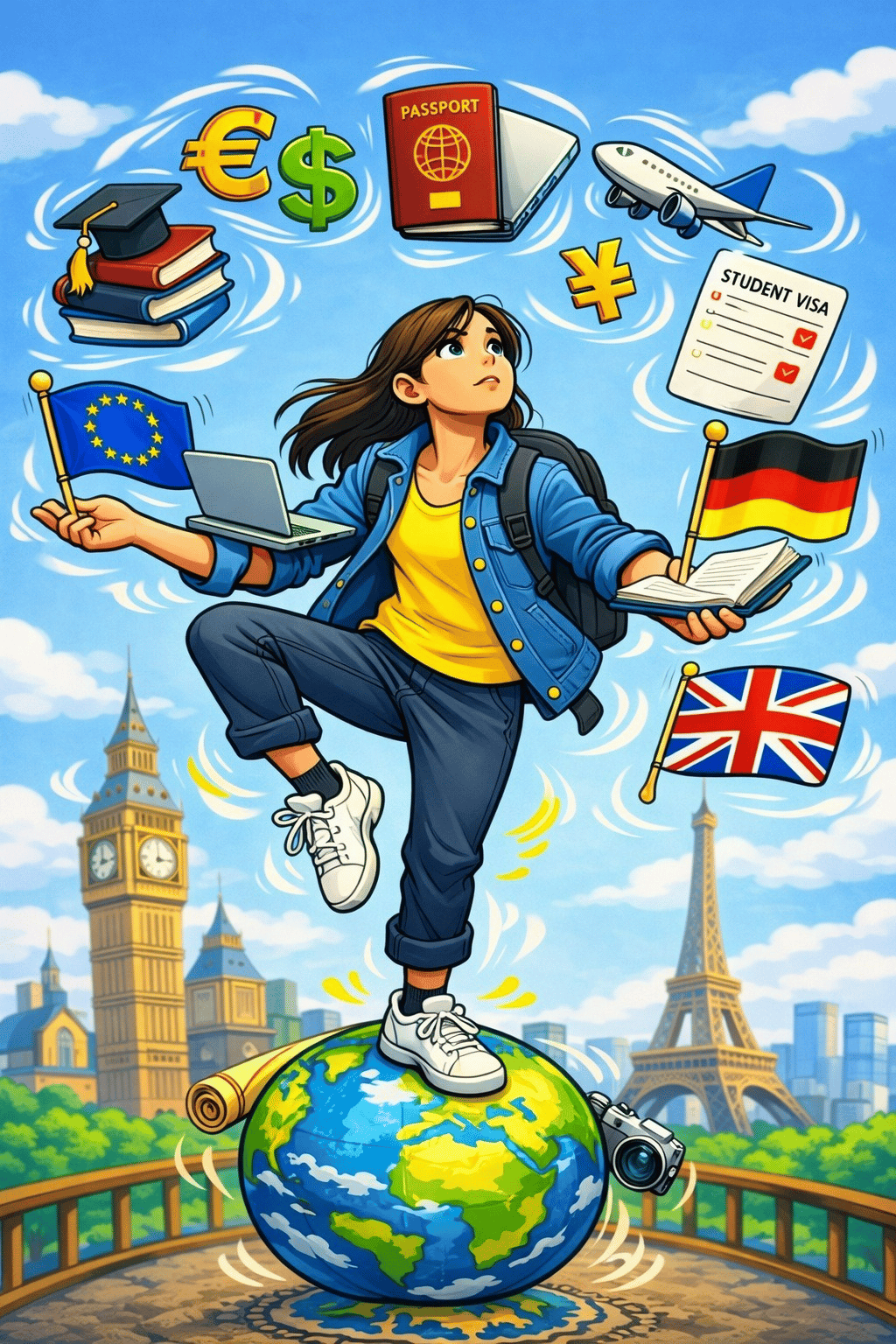
For nearly two decades, Indian students planning to study abroad operated within a broadly stable global system. Countries signaled clearly, visa pathways were relatively predictable, and long-term plans—study, work, settlement—could be made with reasonable confidence.
That world is changing.
Rising geopolitical tensions, shifting immigration policies, and a more transactional approach among major powers—including the United States—are creating a new reality. Opportunities remain abundant, but the rules are evolving faster than before.
For students and families, the question is no longer simply “Where should I go?”
It is now:
“How do I plan for a world where conditions may change midway?”
THIS GUIDE LAYS OUT A PRACTICAL APPROACH:
1. The Big Shift: From Certainty to Flexibility
The earlier model of overseas education was built on commitment:
- Choose a country
- Invest heavily
- Build a long-term future there
That model is under strain.
Today’s environment demands optionality:
- The ability to pivot between countries
- Flexibility in career pathways
- Financial caution
This does not mean opportunities are shrinking. It means they are becoming conditional on adaptability
2. Rethink “Destination”: Think in Clusters
Students often fixate on a single country—typically the United States, the United Kingdom, or Canada. That approach is increasingly risky.
Instead, think in regional clusters:
- North America: US + Canada
- Western Europe: Germany + Netherlands + France
- Oceania: Australia + New Zealand
Why this matters:
- Visa rules can tighten suddenly
- Job markets fluctuate
- Political sentiment shifts
A cluster approach ensures a fallback option is built into your plan from the start
3. Degree Mobility Matters More Than Ranking
Prestige remains important—but mobility is now critical.
Ask these questions:
- Is my degree recognised across multiple countries?
- Can I move within a region after graduation?
- Are qualifications transferable internationally?
European systems often offer advantages here due to:
- Mutual recognition frameworks
- Cross-border work possibilities
A slightly lower-ranked but more portable degree may be a smarter choice than a high-ranked but restrictive one.
4. Choose Fields That Travel Well
In a volatile world, some degrees carry risk because they are tied to:
- Local licensing
- Language barriers
- Country-specific regulations
Safer choices include:
- Technology (AI, cybersecurity, data science)
- Engineering (especially energy, infrastructure)
- Healthcare (with global demand, though licensing varies)
These fields offer cross-border employability. Riskier areas are those where employment depends heavily on local certification or is tied to a single economy
5. Build a “Plan B Country” Early
Most students think about alternatives only after something goes wrong. That is too late. Instead:
- Identify a second country at the application stage
- Understand its visa rules and job market
- Track policy changes in parallel
This reduces panic if:
- Post-study work rules change
- Job prospects weaken
- Residency pathways tighten
6. For Parents: Shift from Prestige to Pathway Security
Parents funding overseas education often prioritise:
- University ranking
- Brand value
These remain relevant—but are no longer sufficient. In today’s environment, equal weight must be given to:
(a) Visa clarity
- Are rules transparent and stable?
- Are changes announced clearly?
(b) Post-study work rights
- Duration
- Conditions
- Likelihood of extension
(c) Cost predictability
- Tuition
- Living expenses
- Currency fluctuations
A degree that is prestigious but leads to an uncertain pathway can become a high-cost gamble
7. Watch Total Financial Exposure
The cost of overseas education has risen sharply. Families must account for:
- Tuition fees
- Living expenses
- Exchange rate volatility
- Uncertain post-study employment
In a stable world, high investment could be justified by predictable outcomes.
In a volatile world over-leveraging becomes dangerous
Practical advice:
- Avoid excessive loans tied to optimistic assumptions
- Maintain financial buffers
- Plan for delayed returns
8. Track Policy, Not Just Universities
Students spend months comparing universities—but often ignore immigration policy trends. This is a mistake. Before committing, assess:
- Recent visa rule changes
- Political discourse around immigration
- Employment restrictions
Countries can—and do—shift policy direction quickly. This means that a good university in an uncertain policy environment may be less attractive than a solid university in a predictable system
9. Build Portable Skills
The most valuable asset in a shifting world is not a degree—it is transferable capability.
Ask: “If I had to move countries in six months, would I still be employable?”
To improve portability:
- Develop digital and analytical skills
- Gain international exposure (internships, projects)
- Build professional networks across regions
Careers are especially resilient when they combine multiple areas. For example:
- Technology + domain expertise
- Business + analytics
10. Understand the Geopolitical Context (Without Overreacting)
Students do not need to become geopolitical analysts. But a basic awareness helps.
Current trends include:
- Greater policy unpredictability
- More transactional international relations
- Periodic economic shocks (energy, inflation)
These affect:
- Job markets
- Visa rules
- Cost of living
However not every headline translates into lasting impact. A wiser approach is to track trends and avoid reacting to isolated events.
11. What to Watch Going Forward
Three practical indicators:
(1) Cost of living trends, especially fuel and housing
(2) Visa policy changes, including post-study work rights and processing timelines
(3) Employment conditions. Look at hiring trends in your field
- If these remain stable then the environment is manageable
- If all three worsen simultaneously then adjust your plans.
As YUNO LEARNING sees it
- Opportunities abroad are not disappearing but the nature of those opportunities is changing.
- The OLD approach was choose once, commit fully, assume stability.
- The NEW approach requires an aspiring student to plan for flexibility, preserve options and adapt early.
- For students and parents, the goal is not to predict the future perfectly. It is to remain positioned for multiple futures.
In a stable world, commitment is strength.
In a changing world, flexibility is resilience.