DHS Ends Automatic Work Permit Extensions: What It Means for Immigrants and Employers
TL;DR
- The U.S. Department of Homeland Security (DHS) has ended the automatic extension of Employment Authorization Documents (EADs), effective October 30, 2025. The rule reversal eliminates the 180-day grace period that allowed immigrants to keep working while renewals were pending—impacting asylum seekers, H-4 spouses, and TPS holders alike.
- DHS calls it a “security step,” but critics warn it could cost hundreds of thousands their jobs amid USCIS’s long processing delays.
- Legal experts expect lawsuits challenging the policy as arbitrary and damaging to the economy.
- YUNO LEARNING notes that Indian H-1B and H-4 workers face the brunt, urging early filings, stronger HR compliance, and coordinated documentation.
When the U.S. Department of Homeland Security (DHS) announced on October 29, 2025, that it would end the automatic extension of employment authorization documents (EADs) for foreign nationals, the news rippled quickly through immigrant communities, legal circles, and corporate HR offices.
For nearly a decade, the automatic extension policy had acted as a safety valve, allowing foreign workers to keep their jobs while US Citizenship and Immigration Services (USCIS) processed renewal applications. Its sudden elimination—effective October 30—marks one of the Trump administration’s most consequential immigration actions since returning to office.
The DHS justified the change as a measure to restore “proper screening and vetting” before granting renewed work authorization. But critics warn the decision could upend the lives of hundreds of thousands of immigrants who depend on timely renewals to remain employed—and could also disrupt American workplaces that rely on them.
What Changed: From Automatic Continuity to Case-by-Case Vetting
An Employment Authorization Document, or EAD, is the federal government’s work permit for non-citizens who are legally in the United States under certain categories—such as asylum applicants, Temporary Protected Status (TPS) holders, and the spouses of high-skilled visa holders (H-4, L-2, or E-2).
Until now, when a worker filed a renewal application before their EAD expired, USCIS automatically extended their work authorization for up to 180 days, allowing them to remain employed while their case was pending.
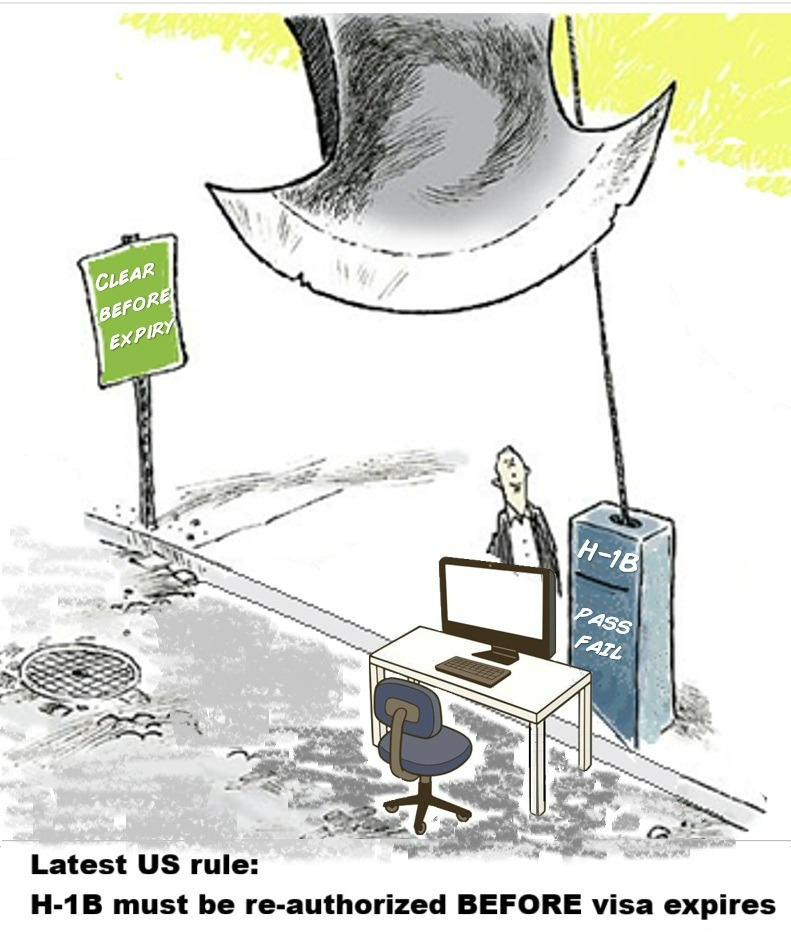
That safeguard has now been rescinded. Going forward, a renewal must be approved before the old card’s expiration date, or the individual must stop working. DHS officials say the change closes a “security gap” and ensures every applicant undergoes up-to-date vetting before continuing employment.
“Employment authorization is a privilege that requires proper review,” the DHS statement said. “This policy restores the integrity of our work authorization process by ensuring that no extensions are granted before eligibility is fully confirmed.”
Who Will Feel the Impact
- The end of automatic extensions will affect a broad and diverse group of foreign workers. Among them:
- Asylum seekers waiting years for decisions on their protection claims.
- TPS holders from countries such as Venezuela, Myanmar, and Sudan, who are lawfully in the U.S. but must renew work permits regularly.
- Dependent spouses of skilled visa holders (for example, H-4 and L-2 holders).
- Students on certain Optional Practical Training programs.
For many, even a brief gap in work authorization can mean the loss of a job, health insurance, and financial stability. Employers, in turn, face sudden staffing gaps and compliance risks if employees’ authorizations lapse.
Under the previous system, the automatic extension prevented such disruptions. Now, unless USCIS adjudicates renewal applications within tight timeframes, both workers and employers face uncertainty.
As of mid-2025, USCIS reported median processing times for EAD renewals ranging from five to nine months—well beyond the 180-day buffer the automatic extension provided. Without that cushion, many applicants could fall out of employment simply because their paperwork remains in bureaucratic limbo.
Legal and Administrative Background
The automatic-extension rule was first introduced in 2016 under the Obama administration to address chronic delays at USCIS. Codified in 8 CFR § 274a.13(d), it aimed to protect both employees and employers from work interruptions caused by backlogs.
In 2022, the Biden administration expanded the automatic extension period from 180 to 540 days to mitigate pandemic-era processing delays. That temporary expansion lapsed in 2023, but the baseline 180-day rule remained until this week.
DHS’s rollback is therefore a sharp reversal of a decade-long bipartisan trend toward administrative flexibility.
Legal experts are already speculating that advocacy groups may challenge the new rule under the Administrative Procedure Act (APA). They could argue that the abrupt change is “arbitrary and capricious” or that DHS failed to provide adequate notice and public comment before implementation.
“This kind of rule change normally goes through a regulatory process with stakeholder input,” said immigration attorney Maria Gonzalez of the American Immigration Lawyers Association (AILA). “Doing it by administrative notice invites litigation—and, meanwhile, thousands of people could lose their jobs.”
The US Govt’s Case: Security and Integrity
The Trump administration argues that automatic extensions undermined the integrity of the immigration system by allowing continued employment without updated vetting.
Supporters of the change say the policy had effectively granted “temporary amnesty through paperwork delays.” They point to reports of prolonged backlogs and outdated background checks that, in their view, left room for abuse.
“This is about restoring order and confidence,” said a senior DHS official who spoke on condition of anonymity. “If someone is eligible, they’ll be approved promptly. But the government shouldn’t extend work privileges automatically without verifying eligibility.”
The administration’s message echoes Trump’s broader immigration platform: prioritizing enforcement and national security over administrative convenience.
Critics Warn of Economic and Human Costs
- Opponents say the security rationale is overstated and the economic consequences are being ignored.
- Immigration and business groups argue that ending automatic extensions will exacerbate labor shortages, especially in healthcare, technology, education, and hospitality—sectors where immigrants often fill essential roles. “The vast majority of these workers have already been vetted multiple times,” said Neil Patel, policy director at the nonprofit FWD.us. “This rule doesn’t enhance security—it just punishes people for bureaucratic delays.”
- For employers, compliance burdens will also grow. Companies must verify that every employee’s authorization remains valid, and sudden expirations could expose them to fines or disruptions. “It’s a nightmare scenario,” said Karen Wilkins, an HR director at a biotech firm in Boston. “We already struggle to navigate the visa system. Now we might lose key team members overnight because their renewals aren’t processed fast enough.”
Possible Legal and Policy Fallout
Legal scholars expect immediate court challenges. The key questions will be:
- Did DHS follow required rule-making procedures?
- Was sufficient notice given to affected populations?
- Does the policy violate due-process rights of individuals with lawful status?
Depending on how courts respond, the rule could be stayed or modified before full implementation. Even if it stands, USCIS will face intense pressure to accelerate EAD processing. Without automatic extensions, the agency’s performance will directly determine whether lawful workers can remain employed.
“The policy could backfire if it leads to mass job losses or an overwhelmed adjudication system,” said Julia Hayes, a policy analyst at the Migration Policy Institute. “Either way, DHS is taking on a heavy administrative burden.”
Economic Stakes and Optics
The decision lands amid ongoing debates about the U.S. labor market and immigration system. With unemployment near historic lows and many industries struggling to fill positions, employers say they can ill afford additional disruptions.
Politically, however, the move reinforces Trump’s campaign message of “restoring control” to immigration processes. It also appeals to his base, which views administrative leniency as a loophole that encourages overstaying or misuse of temporary visas.
The rule’s economic repercussions, though, could test the administration’s balancing act between enforcement and growth. Business groups such as the US Chamber of Commerce and the National Association of Manufacturers have already issued statements warning that ending auto-extensions will hurt competitiveness.
Looking Ahead: Uncertainty and Adaptation
Meanwhile, USCIS faces renewed scrutiny. Unless the agency dramatically improves processing times, the gap between policy intent and on-the-ground reality could widen.
“It’s one thing to demand full vetting,” said Gonzalez of AILA. “It’s another to make people lose their jobs because the government can’t keep up with its own paperwork.”
As with many immigration policies, the implications extend beyond the technical. The end of automatic EAD extensions captures a deeper tension at the heart of American immigration governance—between security and efficiency, enforcement and inclusion. Immigration lawyers are bracing for a wave of emergency consultations and potential litigation.
Whether the change will meaningfully strengthen the system, or simply throw thousands of legal workers into limbo, will depend not only on how DHS administers the rule but also on how swiftly the courts and Congress respond.
Disproportionate impact
This latest rule change is viewed with strong apprehension by Indians working on H-1B visas – and for good reason. With Indians receiving a large share of visas like H-1B and OPT, any tightening of those programs and negative rhetoric around them has a disproportionate impact. Many Indian-origin professionals work in tech, research, etc., making them visible when policy changes or rhetoric mention “foreign workers” or “immigrants undercutting Americans”. It does not help that President Trump and some of his senior aides have made public statements that many in India (and the Indian diaspora) regard as hostile or disparaging to India or Indian-origin workers.
YUNO LEARNING has worked out ‘to do lists’ …
To-Do List for Employers
Remember that H-1B employees cannot self-file their own extensions.
The petitioning employer must handle all extension filings.
File H-1B Extensions Early
File Form I-129 (“Petition for a Nonimmigrant Worker”) on behalf of each H-1B employee at least six months before the current H-1B status expires. Keep proof of timely submission (filing receipts, courier confirmation, etc.) for compliance and recordkeeping.
Update I-9 and Employment Verification Procedures.
Review and update internal Form I-9 practices to comply with new USCIS rules.
Be aware that receipt notices (Form I-797C) for EAD renewal applications filed on or after October 30, 2025 will no longer serve as valid proof of continued work authorization for affected EAD categories (e.g., H-4 EADs).
Train HR staff and update onboarding/verification systems accordingly.
To-Do List for Visa-Holders (H-1B Employees and Dependents)
Coordinate with your employer early
Work with your employer to ensure the H-1B extension petition (Form I-129) is filed well before your status expires (ideally six months ahead).
Manage Dependent Filings
If your dependents (e.g., H-4 spouse or children) are impacted, coordinate their status extensions and EAD renewals in advance to avoid lapses. File dependent EAD renewals before October 30, 2025 when possible to retain eligibility for automatic extensions.
Maintain Records
Keep copies of all filings, approvals, and receipt notices for both your own and your dependents’ applications.