Canada Ends SDS Visa Program: Alternatives and Tips for Indian Students
TL;DR
This blog delves into the sudden cancellation of Canada’s Student Direct Stream (SDS), a visa processing program that once offered quicker approval for international students from select countries. With the recent announcement by the Canadian government, students—especially from India—are now facing extended and unpredictable processing times for their study permits. The article offers insights into what this change means for prospective students and provides actionable advice on how to navigate the new, more challenging landscape. Additionally, it explores alternative visa options and strategies to help mitigate the delays caused by the discontinuation of the SDS program.
Indians hoping to study in Canada got a shock last week. On Friday, November 8, the Canadian government abruptly announced that the Student Direct Streaming was scrapped with immediate effect.
While SDS applicants previously enjoyed a swift and predictable process, those applying for study permits now must brace for delays.
Eligible SDS and NSE applications received before 2 pm ET on November 8, 2024, will be processed under these streams. Study permit applications submitted on or after this time will be processed under the regular study permit stream.
The Department of Immigration, Refugees and Citizenship Canada (IRCC) launched the Student Direct Streaming
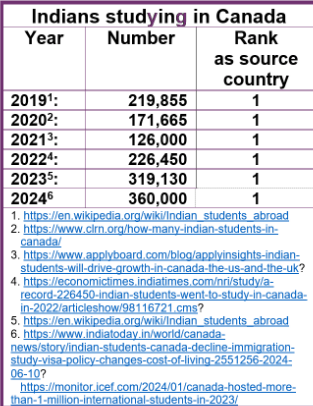
programme in 2018 to ease the visa application process for students from 14 countries, including India, China and the Philippines. It meant quick acceptance for students who could show the Canadian Guaranteed Investment Certificate (GIC) worth $ (Canadian) $20, 635 and clear English or French proficiency tests.
The end of the SDS means longer and more uncertain processing times for all incoming international students. Under the programme, the applicants could secure permits in a matter of weeks. Now, an applicant can expect a decision in about eight weeks, which is the standard processing time. It will now be mandatory to submit all detailed documentation requirements and submit their applications well in advance to prevent any potential delays. Experts believe that the applicants will also have to face additional hurdles to getting the study permits.
What to do now? 1. The standard process requires applicants to submit all required documents at the same time. Ensure you have complete and accurate documentation, including proof of funds, language proficiency, and a solid study plan. 2. Submit your study permit application as soon as possible to allow for longer processing timelines. 3. Reach out to your prospective Canadian institution. Many colleges and universities have resources dedicated to assisting international students with visa-related issues. Institutions may also provide extensions or alternative enrollment options to accommodate affected students. 4. Work with an immigration consultant. A professional knows the ropes and can improve your chances of a smooth application process. 5. Explore alternatives that can speed up your application. These include:
6. Stay informed. Monitor official IRCC announcements and updates regularly. The situation may evolve, and IRCC could provide further guidance on alternative pathways or streamlined options. Subscribe to official IRCC communications, or regularly check their website for real-time information. |
Announcing the discontinuation, the IRCC said: “Canada is committed to giving all international students equal and fair access to the application process for study permits.”
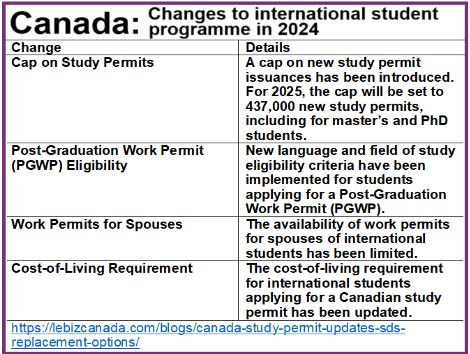
The department said that the move was in line with Canada’s goal is to strengthen program integrity, address student vulnerability, and give all students equal and fair access to the application process, as well as a positive academic experience,
IRCC also announced the closure of its Nigeria Student Express (NSE) stream for study permit applicants from Nigeria.
Conservatives blame foreigners studying in Canada for the country’s severe housing shortage and for months they have hammered Trudeau’s Liberal Party government on this issue. The move also comes as at a time of strained ties between India and Canada over the killing of Khalistani separatist Hardeep Singh Nijjar