Study International Trade Policy Abroad: Courses, Universities and Career Options
When politicians talk about tariffs, trade agreements and exports, most of us hear numbers. But behind those numbers is an entire professional world.
- Economists calculate the likely effects of a tariff.
- Lawyers interpret international agreements.
- Diplomats negotiate with other governments.
- Trade-policy analysts study industries and markets.
- Government officials decide which sectors need protection and which need greater access to foreign markets.
- Business organisations argue for their companies.
- Researchers examine who gains and who loses.
And sometimes, the arguments become intensely political. Donald Trump and tariffs have made international trade policy impossible to ignore. But the underlying questions are much bigger than one politician.
- How open should a country’s economy be?
- How much should a government protect its farmers and manufacturers?
- When does protecting domestic employment become protectionism?
- Can a country encourage local manufacturing without breaking international commitments?
- Should environmental or labour standards influence trade?
- How much economic policy freedom should a country retain after signing international agreements?
- And what happens when trade becomes a weapon of foreign policy?
If those questions interest you, there is a career field with a place for you: International Trade Policy and Economic Diplomacy.
Why This Profession Matters
International trade is no longer simply about goods crossing borders. It now sits at the intersection of economics, diplomacy, technology, national security, climate policy, industrial strategy and domestic politics.
Consider what India is dealing with right now.
- India has recently implemented a major trade agreement with the United Kingdom.
- It has concluded negotiations on a landmark agreement with the European Union.
- It is negotiating with the United States.
- It is strengthening economic relationships with countries such as Belgium.
- It is pursuing access to critical minerals and trying to build resilient supply chains.
Every one of those relationships raises questions that require people who understand both economics and international affairs.
- A trade agreement may determine whether an Indian textile manufacturer can compete in Britain.
- A tariff can change the economics of importing a piece of machinery.
- A subsidy can determine whether a domestic industry gets established.
- A rule of origin can decide whether a product qualifies for preferential treatment.
- A dispute over solar panels can become a question of industrial policy.
- A disagreement over agricultural support can become a question of food security.
- A patent rule can affect access to medicines.
- A restriction on critical minerals can become a national-security issue.
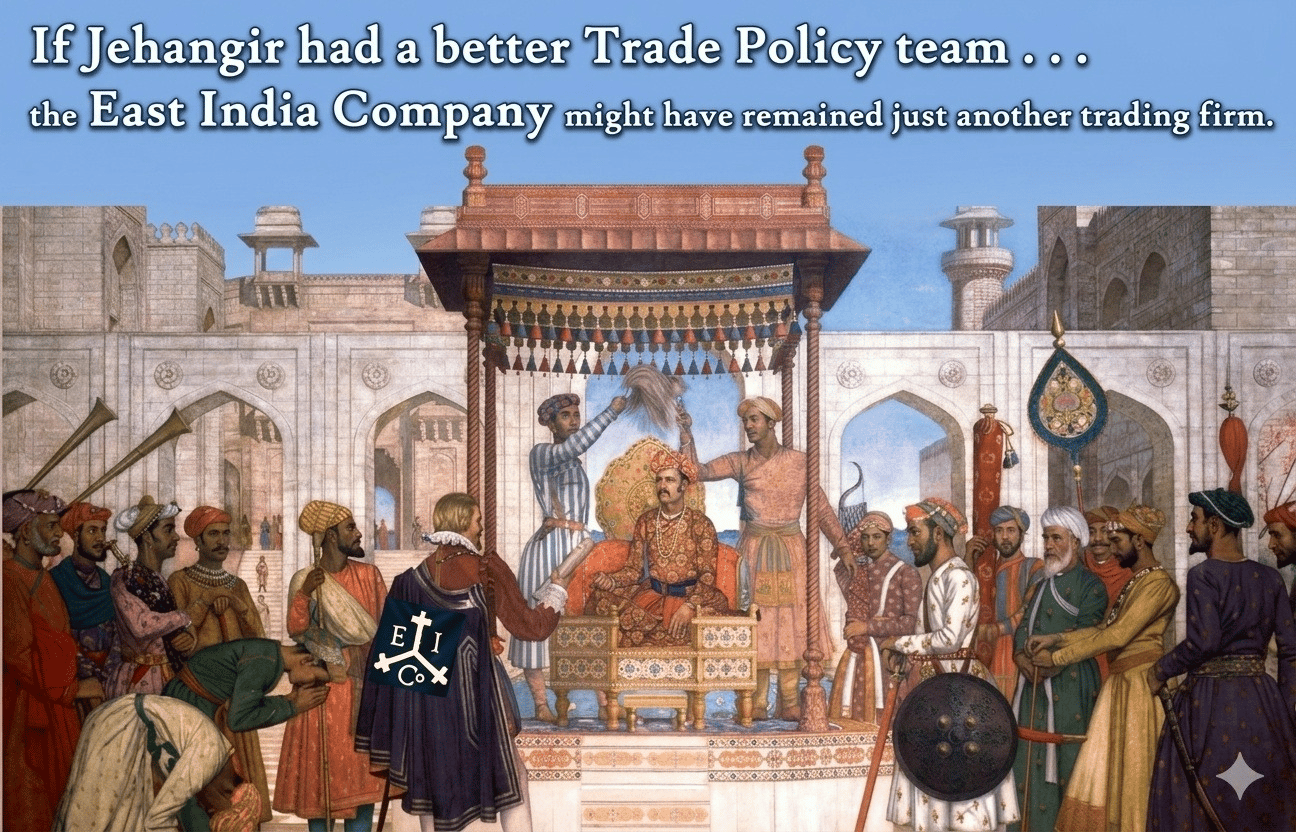
This is why international trade policy is much more than “exports and imports”. It is about the rules under which countries conduct economic life.
A Career That Matters Beyond Your CV
There is another reason this profession is worth considering. Young people reasonably care about salary, job security and international opportunities. They also increasingly ask a less tangible question:
Will the work I do actually matter?
A career in trade policy can offer an unusual answer.
You may never become a household name. You may spend much of your career writing briefing papers, analysing tariff schedules, preparing negotiating positions or sitting in meetings where nobody outside the room knows your name.
But the decisions you help shape can affect exporters, manufacturers, farmers, consumers, workers and entire industries.
A trade-policy professional might help a government decide whether to open a market, defend an industry, negotiate better access for exporters or challenge another country’s trade measure.
That is a fairly consequential job. And perhaps that is worth remembering when choosing a profession. A career does not have to make you famous to make you useful.
The Career Roadmap
Start with the right academic foundation
There is no single undergraduate degree called “International Trade Policy” that you must obtain before entering the field. That is actually good news. The profession draws people from several disciplines:
- Economics
- International relations
- Political science
- Law
- Public policy
- Commerce
- Statistics and data analysis
- International business
- Development studies
An undergraduate degree in economics can lead towards international political economy.
A law student can specialise in international trade law.
An international-relations student can move towards economic diplomacy.
A statistics or quantitative-economics student can work on trade modelling and economic analysis.
A public-policy student can focus on industrial policy, regulation and international economic governance.
The important thing is to build real analytical strength rather than chase a degree title that happens to contain the words “international” or “trade”.
- Learn to read evidence.
- Write clearly.
- Understand economics.
- Become comfortable with data.
- Follow international affairs.
- Learn how governments actually make policy.
And, if possible, learn a second language.
Famous Names — and Other Strong Places to Start
There are some prominent names that students will encounter when researching this field:
- London School of Economics and Political Science
- University of Oxford
- Graduate Institute of International and Development Studies, Geneva
- Johns Hopkins School of Advanced International Studies
- University of Geneva
These are excellent places to investigate. They are also highly competitive, and for many Indian students, expensive. That does not mean that students who cannot enter one of these institutions have somehow missed the profession. Far from it.
International Trade Policy is a multidisciplinary field. A strong undergraduate education in economics, law, international relations, political science, public policy or a related subject can provide an excellent foundation.
A graduate can then specialise at postgraduate level through programmes in:
- International Political Economy
- International Economics
- Trade Policy
- International Trade Law
- Economic Diplomacy
- Public Policy
- Development Economics
- International Relations
For many students, the postgraduate degree abroad becomes a stepping stone into the international professional world. And that distinction matters. Do not confuse prestige with preparation.
A less famous university with a demanding department, good faculty, research opportunities and serious academic work may give you a stronger foundation than a famous institution where you simply collect a brand name. Look for:
- Strength of the relevant academic department
- Faculty working in economics, trade or international affairs
- Opportunities for research
- Writing-intensive coursework
- Quantitative training
- Internships
- Student policy organisations
- International exposure
- Access to seminars and visiting scholars
Your first university does not have to be your last big academic opportunity. The academic histories of several prominent Indian economists demonstrate precisely this point: strong foundations at Indian institutions can lead to major postgraduate opportunities abroad.
So think of education as a sequence, not a single prestige purchase. Build a strong foundation. Then use postgraduate study, research, internships and international exposure to take the next step.
For a career as multidisciplinary as Trade Policy, the stepping stone matters — but so does the foundation on which you place it.
Universities Worth Investigating
We have already mentioned the London School of Economics and Political Science, Graduate Institute of International and Development Studies, Geneva, University of Oxford, and Johns Hopkins SAIS, USA/Europe. But do not stop with these names. Search beyond the obvious.
A student with a strong academic record at a good Indian university may ultimately have a better profile for international postgraduate study than a student who chose an expensive institution purely for its reputation.
Search Keywords
When researching courses, do not search only for: “International Trade Policy degree”
Also try:
- International Political Economy
- International Economics
- Trade Policy
- International Trade Law
- Economic Diplomacy
- Global Economic Governance
- International Business Policy
- Development Economics
- International Relations and Economics
- Public Policy and International Affairs
- WTO law
- Trade negotiations
- Commercial diplomacy
- Economic statecraft
You may discover that your ideal programme is hiding under a completely different title.
What Are the First Jobs?
Your first job may not have “trade policy” in the title. Possible entry points include:
- Trade Policy Analyst
- Economic Policy Analyst
- Research Associate
- Policy Researcher
- International Affairs Analyst
- Trade Economist
- Economic Affairs Officer
- Government Policy Officer
- Research Assistant
- International Relations Analyst
- Trade and Investment Analyst
- Consultant
- Regulatory Affairs Analyst
- Public Affairs Analyst
- International Business Analyst
- Junior Economist
- Trade Lawyer
A law graduate might enter through international trade law.
An economics graduate might begin with trade analysis or economic research.
An International Relations graduate might enter a government department, think tank or diplomatic organisation.
A data-oriented graduate might work on trade statistics, modelling or economic forecasting.
There is no single doorway.
Where Can You Work?
This is one of the attractions of the field.
Governments
In India, relevant work can involve institutions and ministries dealing with:
- Commerce
- Finance
- External Affairs
- Industry
- Agriculture
- Economic affairs
- International cooperation
The exact job title may vary, but the underlying work can involve negotiating agreements, analysing trade data, preparing policy positions and assessing international developments.
International Organisations
The World Trade Organization is the obvious example. But the wider international ecosystem includes organisations working on development, finance, investment and economic cooperation. The WTO itself employs economists, lawyers, trade-policy analysts, statisticians, researchers and specialists in several other functions. A career at the WTO therefore illustrates something important about the profession:
International trade is not one profession. It is a professional ecosystem.
Think Tanks and Research Organisations
Trade policy is heavily research-driven. Think tanks, universities and policy institutes employ researchers who analyse:
- Tariffs
- Trade agreements
- Supply chains
- Industrial policy
- Globalisation
- Trade disputes
- Investment
- Development
- Geopolitics
- Economic security
- Law Firms
International trade lawyers advise companies and governments on trade rules, customs, tariffs, anti-dumping measures, subsidies and disputes.
Consulting and Business
Large companies increasingly need people who understand how governments and international markets interact. Trade-policy specialists can work in:
- Consulting
- Corporate strategy
- Government relations
- Public affairs
- International business
- Supply-chain strategy
- Regulatory affairs
Trade as battleground
International Trade Policy is sometimes presented as though its objective were simple: Reduce tariffs. Increase exports. Make trade easier.
Reality is much more complicated. And this is where institutions such as the World Trade Organization become fascinating — and controversial. Trade rules can collide with domestic priorities.
A government may want to:
- Protect farmers
- Encourage local manufacturing
- Support a new industry
- Safeguard public health
- Promote clean energy
- Reduce dependence on foreign suppliers
- Protect strategic technologies
- Maintain food security
Another country may argue that the same measures distort competition or violate international commitments.
This is not necessarily evidence that one side is right and the other wrong.
It is the stuff of international trade policy. Trade-policy professionals deal with competing interpretations of rules, competing national interests and competing ideas of what constitutes fair trade.
And then there is the subject well known to anyone who follows the news:
Recent political developments have made tariffs such a household word. US President Trump’s use of tariffs has turned what was once a technical instrument of economic policy into a major tool of domestic politics and international bargaining.
A tariff sounds simple: a government taxes imports. But then the complications begin.
Who ultimately pays? Does the importer absorb the cost or pass it to consumers? Does domestic manufacturing become more competitive? Do other countries retaliate? Do companies move production? Can a tariff become a bargaining chip in a wider diplomatic negotiation?
Suddenly, a percentage on a customs schedule has become geopolitics. Trade policy is not about memorising rules. It is about understanding who made them, whose interests they serve, and how they might need to change.
The Questions That Keep Trade Policy Professionals Awake
Once you enter this field, you encounter questions that have no neat answers.
Should a developing country protect an emerging domestic industry?
Protection may give an industry time to develop.
But prolonged protection can also shelter inefficient companies from competition.
How much should governments support farmers?
Farm support may protect livelihoods and food security. But subsidies can affect production, prices and international competition.
When does environmental policy become a trade barrier?
A country may impose environmental standards for legitimate reasons.
Another country may argue that those standards unfairly disadvantage its exporters.
Who decides?
How much policy freedom should governments surrender?
International agreements create predictability but they can also constrain governments from changing policies later.
Where should the balance lie?
Should national security influence trade?
The old assumption was that trade and security were separate. That assumption is becoming increasingly difficult to maintain. Semiconductors, critical minerals, energy technology, pharmaceuticals, artificial intelligence and telecommunications can all have strategic importance.
What matters more: economic efficiency or resilience?
The cheapest supplier is not necessarily the safest supplier. The pandemic, wars, geopolitical tensions and supply-chain disruptions have made governments think harder about dependence.
These are not questions that can be answered by economics alone. They require law, politics, diplomacy, ethics and an understanding of national priorities. That is why this profession needs people who can cross disciplines rather than remain trapped inside them.
What Does Economic Diplomacy Mean?
The phrase sounds grander than it is. Economic diplomacy simply means using diplomatic relationships to advance economic interests — and using economic relationships to support broader diplomatic objectives.
A diplomat may discuss:
- Trade
- Investment
- Market access
- Energy
- Technology
- Infrastructure
- Critical minerals
- Supply chains
- Development finance
A trade negotiator may spend months discussing a seemingly microscopic clause in an agreement. That clause may eventually affect billions of dollars of commerce.
Economic diplomacy therefore sits somewhere between the foreign ministry, commerce ministry, business community and international economic system.
If you like both economics and international affairs, it is a natural intersection.
Interesting Career Twist
You do not necessarily have to become a diplomat.
Nor do you have to become an economist.
Nor a lawyer.
Nor a civil servant.
You can move between worlds.
- A lawyer may become a trade-policy specialist.
- An economist may move into diplomacy.
- A diplomat may specialise in economic negotiations.
- A business professional may move into government affairs.
- A policy researcher may move into an international organisation.
- A statistician may work on trade modelling.
- A journalist with strong economic and international-affairs knowledge may become a specialist analyst.
This is one of the advantages of the field. It rewards people who can act as bridges rather than silos.
India Connection
For an Indian student, this career rooted in ground realities and real consequences. India is one of the world’s largest economies and one of the most weighty participants in the global trading system.
- Indian businesses depend on international markets.
- Indian manufacturers compete with foreign producers.
- Indian farmers are affected by global commodity prices.
- Indian pharmaceutical companies operate within international intellectual-property rules.
- Indian technology companies sell services around the world.
- Indian exporters negotiate market-access problems.
- Indian governments negotiate trade agreements.
- Indian diplomats participate in economic negotiations.
India’s economic relationships increasingly overlap with questions of:
- Defence
- Technology
- Climate
- Critical minerals
- Energy
- Supply-chain resilience
- Digital trade
In other words:
India needs people who understand the world economy and understand India.
Will AI Take My Job?
AI will certainly change this profession. It can already help analyse large datasets, summarise regulations, compare trade agreements, track policy developments and identify patterns in economic information.
A junior analyst who spends three days compiling a table may eventually discover that software can do the same task in minutes. That is not necessarily bad news. It means the valuable human contribution moves upward.
The professionals who become more valuable will be those who can:
- Ask the right questions
- Judge the quality of evidence
- Understand political context
- Recognise conflicting interests
- Negotiate
- Persuade
- Explain complicated issues clearly
- Make decisions under uncertainty
- Understand what the data does not tell you
AI can tell you what a tariff schedule says.
- It cannot automatically determine what a government should be willing to concede in a negotiation.
- It can compare two trade agreements.
- It cannot decide which political compromise will survive at home.
- It can model economic consequences.
- It cannot decide how a country should balance food security against trade liberalisation.
The more the profession becomes about judgement rather than mechanical information processing, the more valuable human judgement becomes.
Is International Trade Policy for You?
You may enjoy this field if…
- You are fascinated by how countries interact.
- You enjoy economics but do not want a purely mathematical career.
- You like politics but want to work on concrete policy questions.
- You enjoy reading, research and writing.
- You are comfortable with data.
- You like arguments in which both sides have legitimate points.
- You enjoy understanding systems rather than isolated facts.
- You are curious about how governments make decisions.
- You can tolerate complexity and ambiguity.
- You like working across disciplines.
- You want an international career.
Think twice if…
- You need immediate, visible results from your work.
- You dislike reading lengthy documents.
- You hate economics.
- You find negotiation frustrating.
- You want every problem to have one objectively correct answer.
- You dislike bureaucracy.
- You are uncomfortable defending a position you personally would not have chosen.
- You have little patience for details.
Trade policy can be intellectually exciting. It can also involve spreadsheets, regulations, footnotes and meetings that seem capable of surviving even the heat death of the universe. You have been warned.
The Personality of the Profession
There is a particular kind of person who thrives here. Not necessarily the loudest person in the room. Often it is the person who listens carefully, spots the contradiction, reads the 70-page document everyone else avoided and then says:
“But what happens if the other side does this?”
Curiosity is more useful than swagger.
So is patience.
So is the ability to see several sides of an argument without becoming paralysed by them.
Quick Verdict
| Factor | Verdict |
| Global demand | High |
| International mobility | High |
| AI resilience | Moderate to high, especially in senior analytical/negotiating roles |
| Competition | High |
| Academic flexibility | Excellent |
| Need for postgraduate study | Often useful, sometimes essential for specialised international roles |
| Earning potential | Wide range; strongest in specialised private-sector, legal and consulting roles |
| Public-sector prestige | High, but entry can be highly competitive |
| Long-term outlook | Strong |
| Best advantage | Ability to combine economics, policy, law and diplomacy |
Research Box
If you want to investigate this profession seriously, begin with primary sources rather than random career websites.
Official organisations
- World Trade Organization
- Ministry of Commerce and Industry, Government of India
- Ministry of External Affairs, Government of India
- European Commission — Trade
- World Bank
- International Monetary Fund
- UN Trade and Development
- Universities
Search the official websites of:
- LSE
- Oxford
- Graduate Institute Geneva
- Johns Hopkins SAIS
- University of Geneva
Then investigate strong Indian institutions offering economics, law, international relations, public policy and related subjects.
Professional and academic fields
Look for:
- International Political Economy
- Trade Economics
- International Trade Law
- Economic Diplomacy
- Global Economic Governance
- International Relations
- Development Economics
- Public Policy
Journals and research
Look for journals and research covering:
- International economics
- Trade policy
- International political economy
- Development
- Global governance
- WTO law
And learn to use the WTO’s own databases, dispute-settlement records and trade-policy material. The best way to understand this profession is not to read about it as a career. Read the arguments professionals are actually having.
If You Remember Only One Thing…
International Trade Policy is not simply about tariffs. It is about the difficult decisions that arise when national interests meet an interconnected world.
- A country wants access to foreign markets.
- It also wants to protect its farmers.
- It wants foreign investment.
- It also wants domestic industries to grow.
- It wants cheap imports.
- It also wants resilient supply chains.
- It wants technological innovation.
- It also wants strategic independence.
- It wants international rules.
- It also wants room to make its own decisions.
There is no perfect answer. That is precisely why people are needed to negotiate the compromises.
Profession Snapshot
- Typical age entering the profession: 24–30-ish for many specialised international-policy roles
- Typical first salary: Highly country- and sector-dependent
- Main employers: Governments, international organisations, think tanks, universities, consulting firms, law firms, multinational companies and industry associations
- Works mostly: Research, analysis, negotiation, writing, meetings, policy development and stakeholder engagement
- Best suited to: People who enjoy economics, international affairs, research, argument, writing and solving problems that do not have simple answers